Lomé, the Other Fashion Capital

Cosmopolitan and socially engaged, Lomé Fashion Week asserts its uniqueness in the African fashion landscape. The Togolese capital distinguishes itself through an international and solidarity-driven approach spearheaded by its founder, Jacques Logoh—a vision reaffirmed during the 12th edition in early April.

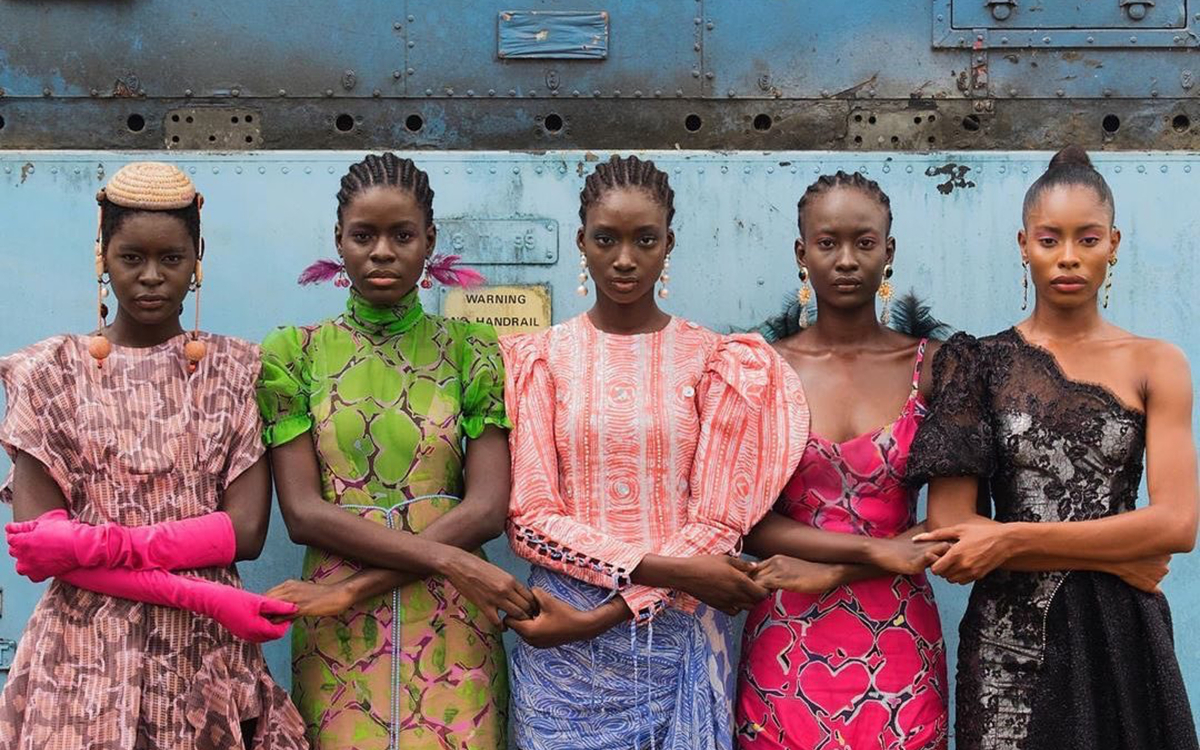
From April 1 to 5, the Lomé International Fashion Festival (FIMO) showcased vibrant yet increasingly refined, singular, and sophisticated creations, reflecting the diversity and rising caliber of African haute couture.

A Wealth of Talents

This year, a record number of around fifty designers participated in FIMO, with a three-part program designed to foster dialogue between established designers and emerging talents. Two evenings were dedicated to highlighting young designers — Togolese on April 3rd and Pan-African on April 4th — before a grand finale focused on haute couture under the theme “Apotheosis” on April 5th.

Among the best-known designers was, of course, Jacques Logoh, founder of the event, whose all-white collection made a lasting impression, true to his fluid and minimalist style. Helmer Joseph was also among the standout names. A seasoned designer trained by some of the most prestigious Parisian luxury houses, he displayed technical mastery and visionary talent through sculptural designs and stunning fabric layering. Nigerian designer Ejiro Amos Tafiri wowed the audience with her graceful and airy silhouettes. Meanwhile, multi-award-winning film costume designer Mame Faguèye Bâ lived up to her reputation with creations as spectacular as the models’ presence on the runway.

Among the rising stars, Gabonese designer Olivia Mangue caught attention with her elegant, contemporary suits — pieces tailored for the new generation of working women. More sculptural were the creations of Ivorian designer Michael Trah, first revealed at MASA MODE 2020, and young Togolese designer Eugénie Guidi Ayawa, whose collection “La Vie en Couleur” aimed to break stereotypes and encourage African women to embrace their curves with pride.

Fashion with a Purpose

Frivolous, fashion? Not in Jacques Logoh’s view, who makes it a point each year to anchor the runway shows in major social issues as HIV/AIDS, malaria, COVID-19, or the environment. This year, for the second time in a row, the event was linked to a particularly sensitive cause: cancer, under the theme “Fashion for a World Without Cancer.”

To open FIMO, a conference was held with healthcare professionals to emphasize the importance of screening and encourage designers to promote prevention through their work.

On the runway, the designers embraced the cause with collections full of symbolism. Colors carried strong meaning: while pink was a dominant color on the catwalk, Olivia Mangue chose black and white to represent cancer and healing in her aptly named collection “Resilient Elegance.” Ivorian designer Nina Bornier, founder of the G’Nanttin by Nini brand, went with the evocative name “Panacea” — a reference to a universal cure — and used a striking red shape to symbolize cancer, omnipresent on the runway. Young Equatoguinean designer José Aniceto, founder of the JANEA brand, fully embraced the theme with silhouettes adorned with ribbons, both large and small.

Africa Meets the World

Designers from 25 countries participated this year — up from 20 last year — in line with Jacques Logoh’s ambition for international expansion. Designers came from across the continent as well as from abroad, including French designer Caroline Bouvier. The audience, too, was truly international.

For FIMO’s founder, this international dimension serves a dual purpose. On one hand, it allows designers to draw inspiration from a wide variety of sources, in line with Jacques Logoh’s cosmopolitan vision that champions a universal fashion aesthetic beyond traditional African fashion clichés. On the other hand, it increases designers’ visibility. “Designers need to be known in order to make a living from their work. FIMO brings attention to designers and models.”

It’s also worth noting that this internationalization goes both ways. Not only does FIMO welcome international designers to its Togolese catwalks, but Jacques Logoh has, for the past two years, also brought African fashion to Paris during Fashion Week. A “Night of African Haute Couture in Paris” is already scheduled for September 27. And Logoh doesn’t plan to stop there — he’s also setting his sights on launching a US edition of FIMO!

Share the article
also read
  • All Posts
  • Lifestyle
  • Beauté
  • Culture