Everything begins with a call. The sound of drums travels across the village, gradually drawing people together. Then come the songs, the voices, the movements. And suddenly, they appear: animals, emerging from nowhere, carried by unseen bodies. A lion advances, a fish undulates, an antelope cuts through space. The audience laughs, comments, recognizes. The performance is everywhere, and everyone is part of it.
Along the Niger River and its tributary, the Bani, Bozo, Somono, Marka and Bamanan communities have, for generations, gathered around a total theatre: sogo bò, literally “the animals come out” in Bamanankan. Masks, puppets, songs and drums come together in a performance that speaks of the bush, the river, and everyday life—blending mythic narratives with sharp social commentary.
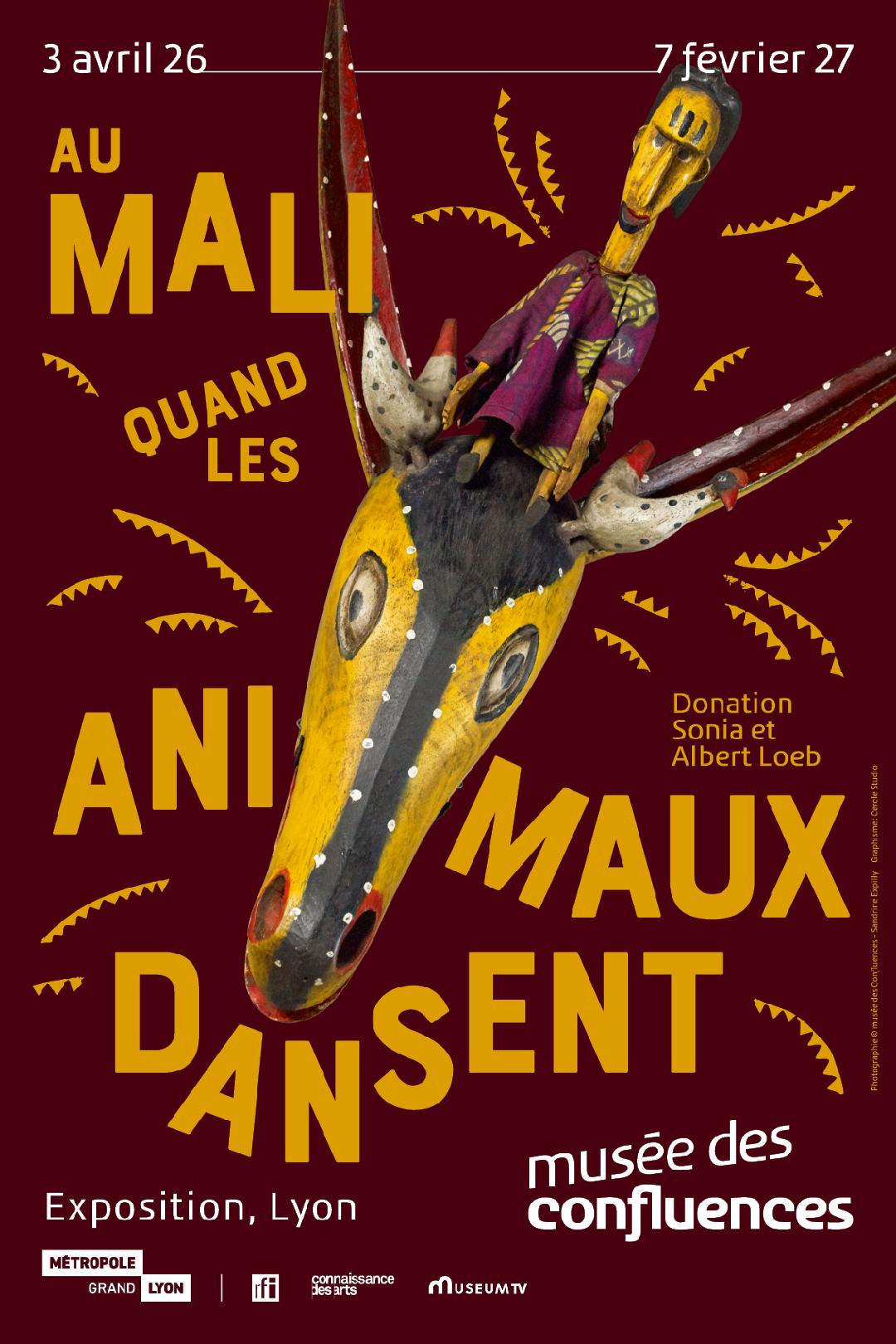
In Lyon, the Musée des Confluences has chosen to devote a major exhibition to this practice, drawing on the donation of Sonia and Albert Loeb, collectors who patiently assembled around one hundred pieces in Mali in the early 2000s. The aim is twofold: to preserve objects from a threatened tradition and to offer European audiences an experience that remains faithful to the spirit of a village celebration.
A Tradition Under Strain
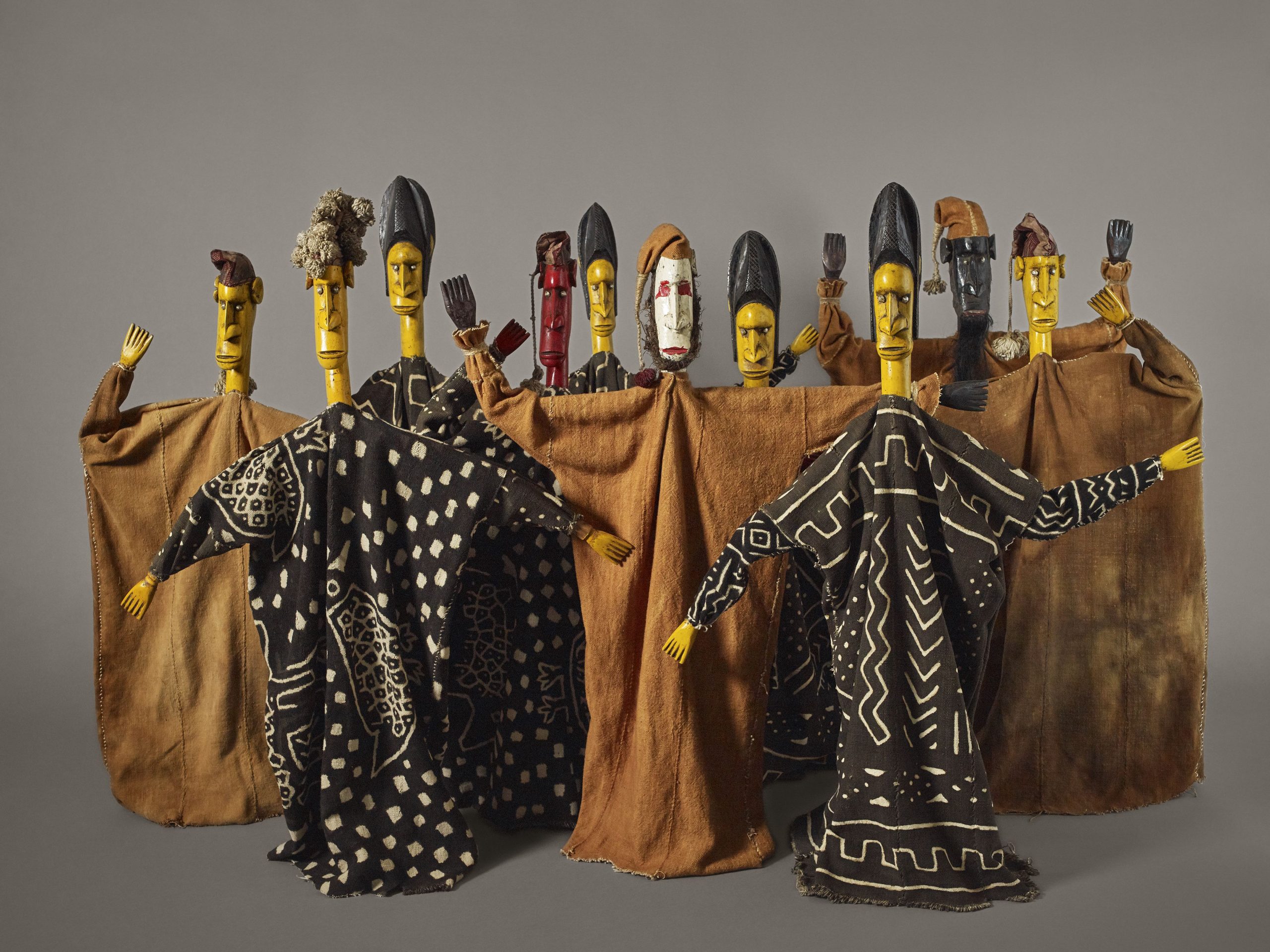
Sogo bò is, above all, a collective practice. Organized by the tònw, age-grade associations, these festivals take place before the rainy or cold season. At their core are the sogow—animal masks—and the jirimaaninw—small wooden human figures—brought to life on kalaka, large bamboo structures that conceal the performers.
Far from being merely decorative, these figures embody characters, social roles and situations, forming a true theatre of the world. Among them are the dajèkun, an antelope associated with endurance; the warabakun, a black-maned lion representing authoritarian power that hunters pretend to subdue; and the bama, a feared crocodile that crawls along the ground before being symbolically defeated.
Each performance blends theatre, dance, drums and songs performed by young women. These songs comment on human behavior, promote values such as generosity and solidarity, and gently mock social flaws.
A secular and participatory practice, sogo bò structures community life. Young men build the kalaka, select and maintain the masks; young women compose and perform the songs that give meaning to each appearance. Inscribed in 2014 on UNESCO’s Representative List of the Intangible Cultural Heritage of Humanity, the tradition reinforces cohesion and intergenerational transmission.
Yet it is under strain. Security challenges, environmental changes—river silting, pressure on fishing resources—and rural exodus make it increasingly difficult for villages to mobilize the time, materials and collective effort required for these demanding preparations.
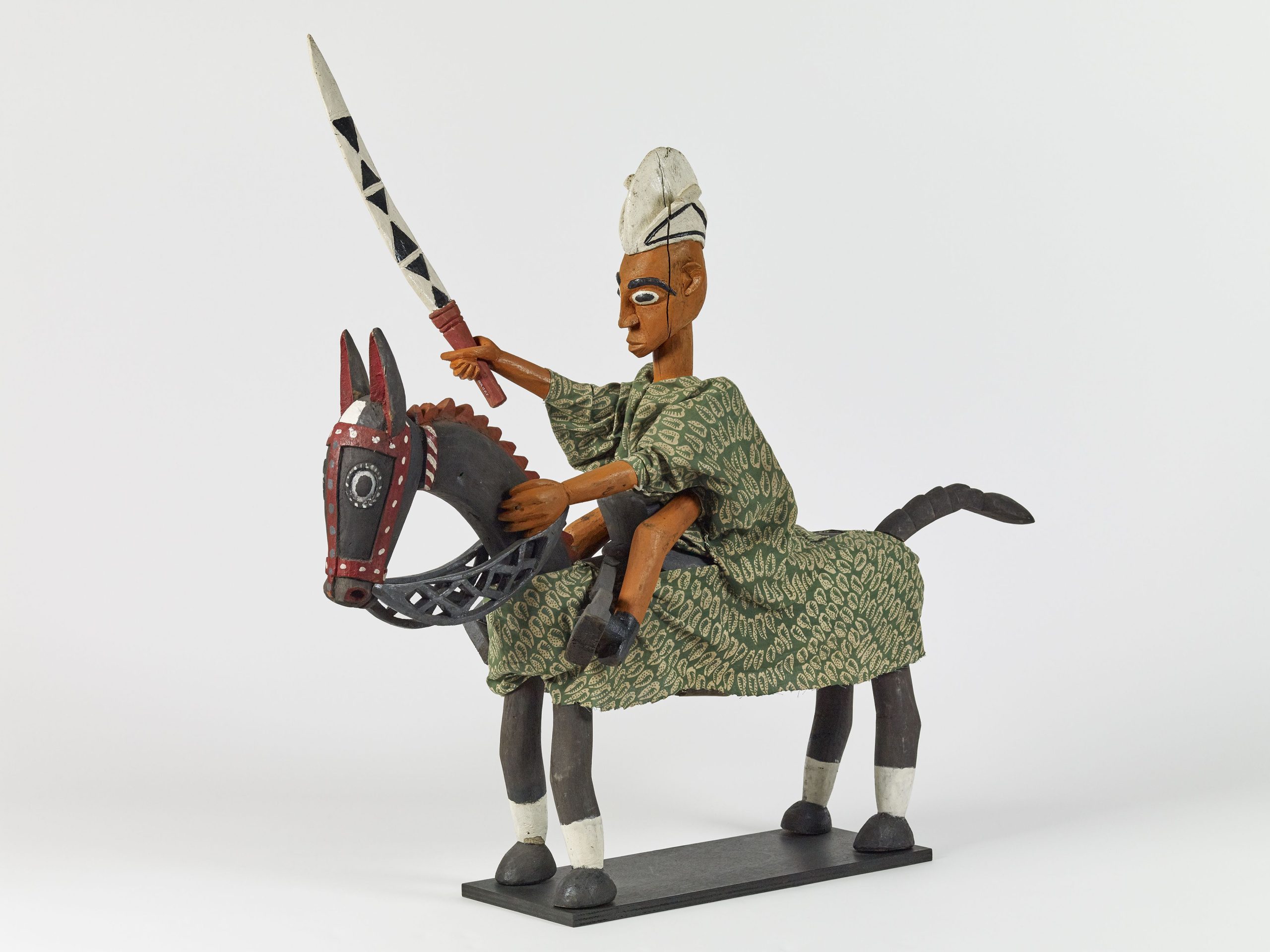
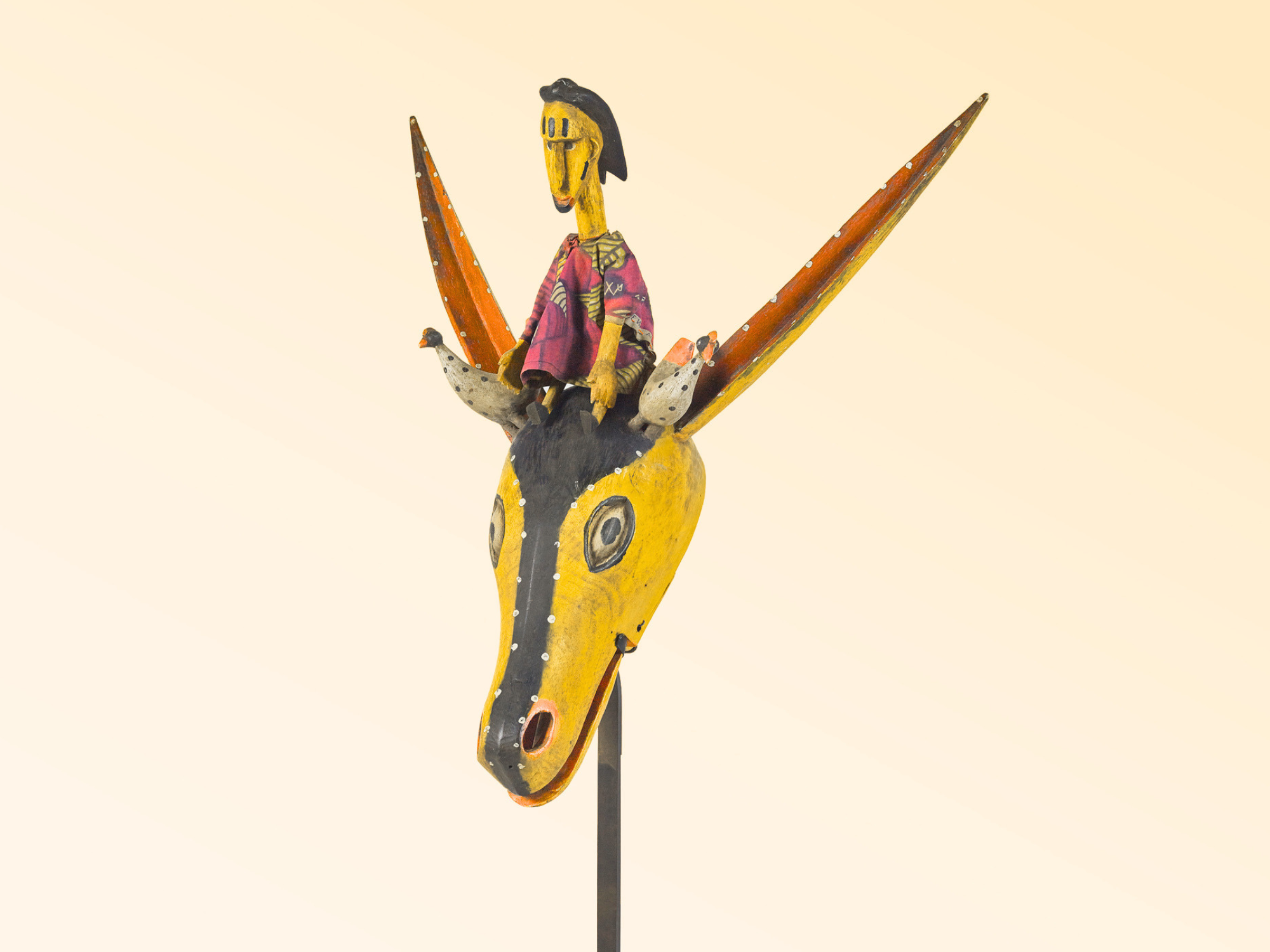
In this context, the Loeb donation, accompanied by archives and field recordings, responds to a crucial need: preserving not only the objects, but also the knowledge and narratives that give them meaning.
Staging the Living
Presenting sogo bò in a museum entails a radical shift in context. This is an art form that cannot be reduced to its material components: it is inseparable from movement, sound and audience participation.
The exhibition at the Musée des Confluences, spanning 710 square meters, addresses this challenge through an immersive scenography designed by Lorenzo Greppi. From the entrance, a monumental antelope head signals the spectacular nature of the journey. The exhibition unfolds like a day of celebration, with four circular spaces evoking mask performances from afternoon light to nightfall.
The works are displayed without glass cases, as close as possible to the viewer, on curved textile supports that echo materials from their original context. Highlights include powerful buffalo masks, fish masks used in water performances, and groups of jirimaaninw representing different age groups dressed in bogolan textiles.
At the center, the Niger River is suggested through an installation where a pirogue carries aquatic figures, surrounded by veils animated by light and video. Projections and sound recordings—songs, drums, festival footage—enhance the experience. More intimate spaces, designed like small huts, offer testimonies and stories.
The museum has also chosen to reconstruct certain costumes in collaboration with the Opéra national de Lyon, particularly to restore the full presence of large bird masks known as kòtè kònòw. Without claiming authenticity, these reconstructions convey scale and movement.
Rather than attempting an impossible replication, the exhibition offers a sensitive translation. It invites a different kind of attention—focused on forms, details and techniques. The visitor is no longer part of the performance, but gains a broader understanding, between sensory experience and contextual insight.
An Art in Motion
Despite the fragilities affecting its practice today—or perhaps because of them—sogo bò appears to be reaching wider audiences and entering a new phase of vitality.
Conceived in response to this sense of urgency, the Lyon exhibition allows a diverse international audience—families, children, enthusiasts of anthropology and performing arts—to discover a practice still largely unknown outside Mali. The programming at the musée des Confluences extends this dynamic: opening night combines exhibition visits, a concert and a screening of Togo, the Master Puppeteer. A few weeks later, Malian musician Habib Koité will perform with kora and balafon, while workshops, guided tours and mediation activities encourage active engagement.
In Mali itself, festivals such as Fesmamas in Markala or Ségou’Art in Ségou contribute to this momentum. They bring sogo bò into dialogue with contemporary forms—current narratives, rap, electronic music—reaching new, often urban audiences. Without breaking with tradition, these contexts renew its modes of expression.
In these spaces, sogo bò is not merely preserved: it evolves. Confronted with other practices, it gains visibility while exploring new possibilities.
Between the banks of the Niger and those of the Rhône, sogo bò shifts context without losing its original purpose. Animals continue to emerge—to speak about humans—while finding new ways of existing in changing worlds.