Every June, Basel becomes the centre of gravity for the contemporary art world. Around Art Basel gravitate satellite fairs, galleries, foundations and cultural institutions that turn the city into a vast territory of exhibitions, encounters and debates. In this effervescence, each event seeks to assert its own specificity and to offer a distinct reading of contemporary creation.
It is within this particularly dense landscape that Africa Basel has gradually established itself as one of the notable rendezvous of Basel Art Week. Dedicated to contemporary African and diasporic art, the young fair – whose second edition took place from 17 to 21 June 2026 – does not stand out by its scale but by the coherence of its project. In contrast to the logic of accumulation that often characterises large fairs, it claims a deliberately compact “boutique fair” format and a route conceived as a genuine discovery experience. The aim is not simply to show works, but to create the conditions for a more attentive encounter with artists, their practices and the narratives they carry.
The Art of Slowing the Gaze
In a landscape where contemporary art fairs tend to compete on the number of galleries and the density of their programmes, Africa Basel adopts a counter‑current position. From the outset, its founders chose to prioritise the quality of the experience over the quest for exhaustiveness. The ambition is not to deliver a comprehensive overview of African art scenes, but to offer a framework conducive to a more attentive, more lasting and more demanding form of discovery.
In 2026, this ambition translated into a selection limited to eighteen galleries, chosen as much for the quality of their curatorial work as for their commitment to the artists they represent. From Circle Art Gallery in Kenya to ArtHARARE in Zimbabwe, from Modzi Arts Gallery in Zambia to LA GALERIE 38 and KE’CH Collective in Morocco, through to October Gallery in London, Africa Basel brought together actors who each, in their own way, contribute to the dynamism of African and diasporic art scenes. More than a simple juxtaposition of exhibitors, this selection outlined a community of galleries sharing the same demand for long‑term support, discovery and transmission.
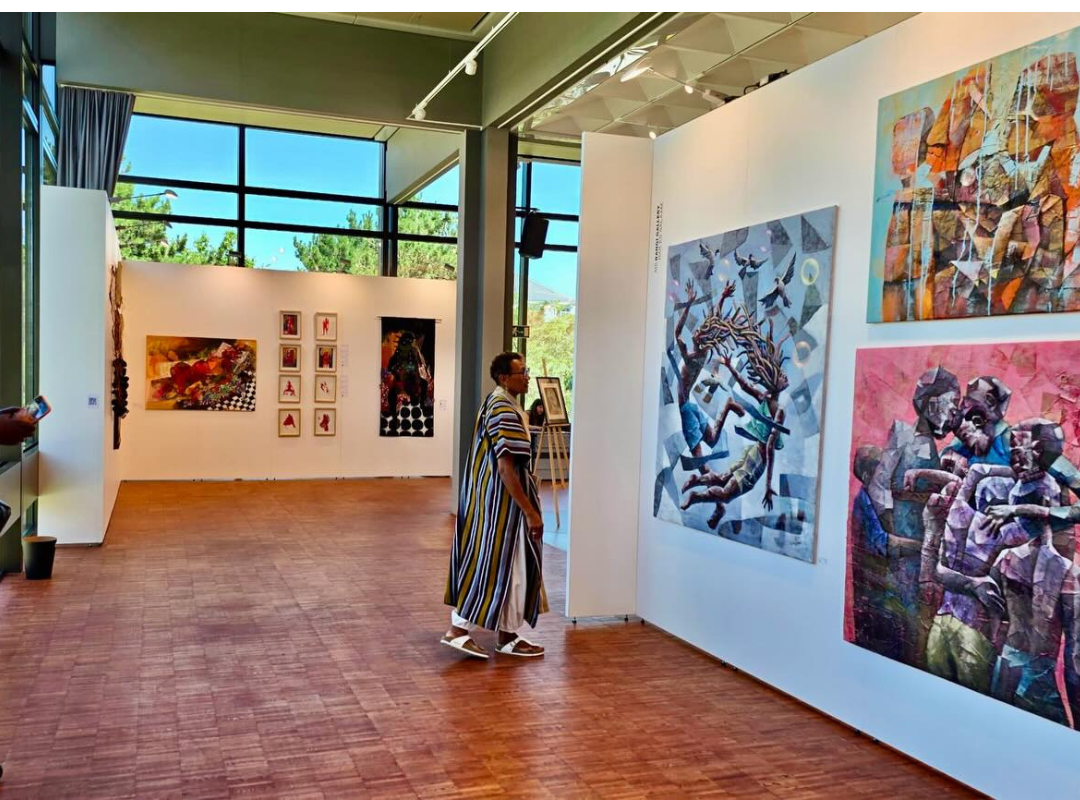
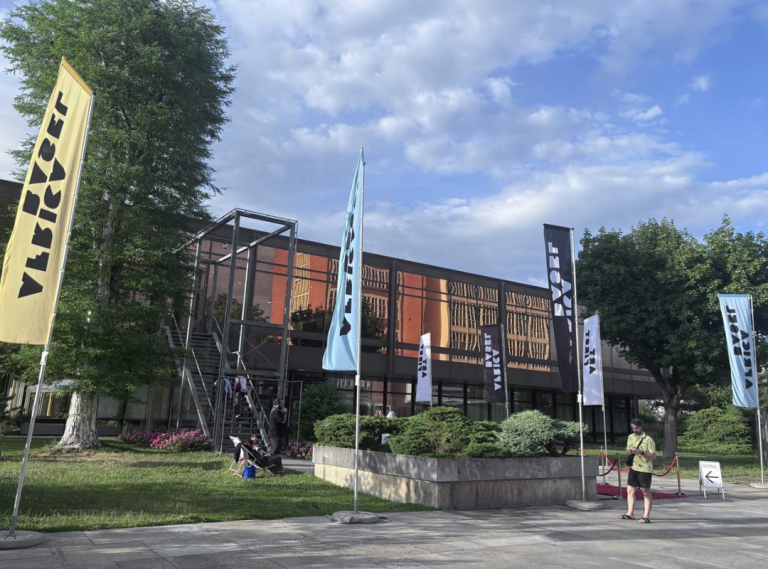
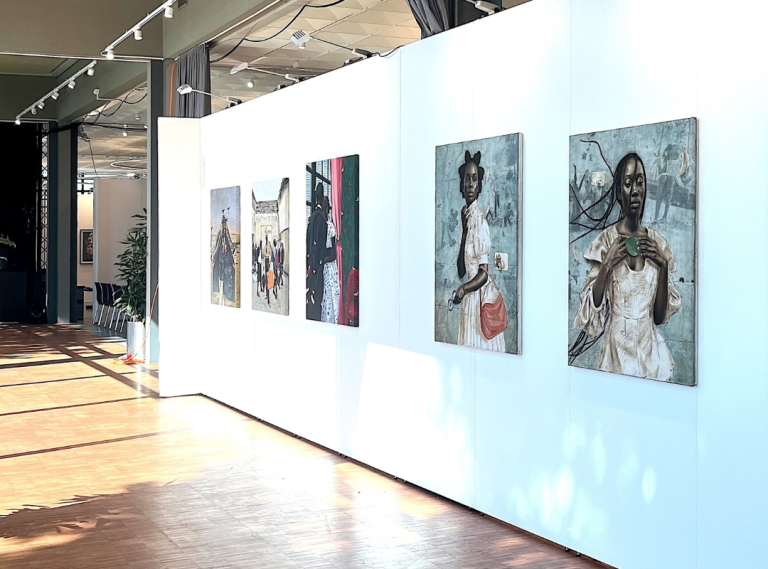
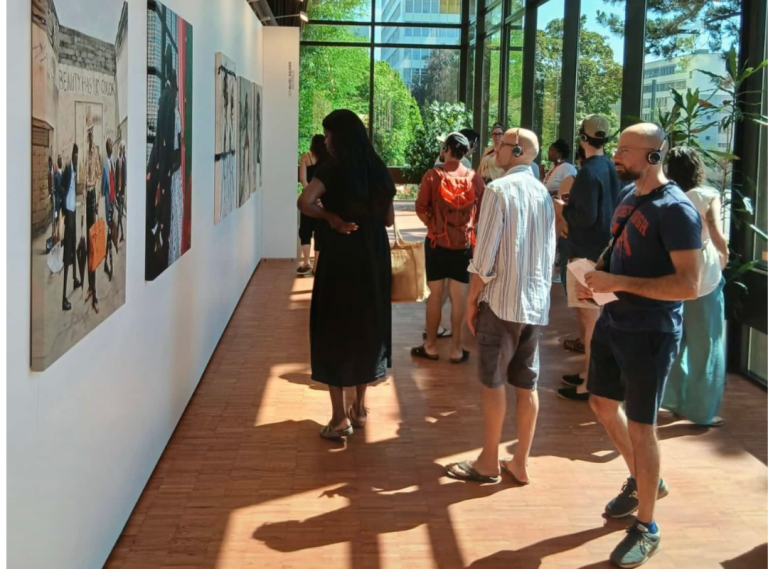
The compact format was accompanied by a strong desire to “edit” the visitor’s path. The fair was not conceived as a succession of booths but as a progression in which each step sheds light on the next. The venue itself was integral to this staging. For its second edition, the fair took over Klybeck 610, a former industrial building in Basel’s Klybeck district. With its generous volumes, tall windows bathing the space in natural light and its largely preserved architecture, the building offered a setting fully in tune with the fair’s philosophy. Where some events impose a rapid tempo, Klybeck 610 established another kind of temporality: more fluid circulation, more open perspectives, and works finally given the space they need to enter into dialogue with their environment.
Curatorial choices, scenography, the articulation of different formats and the very rhythm of the visit answered to a common intention: slowing the gaze. In an environment of constant stimuli, Africa Basel created favourable conditions for deeper attention, encouraging connections, resonances and dialogue between works.
When Artworks Push Beyond Their Frame
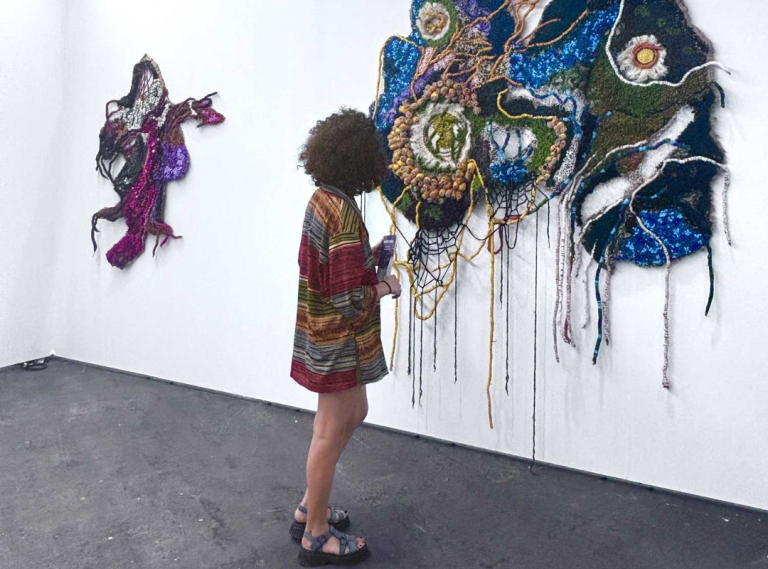
The format chosen by Africa Basel served the encounter with the works themselves, whose diversity reflected the richness of African creativity. Paintings, sculptures, installations, textile works and multimedia pieces engaged in conversation along a single route. The monumental assemblages of Moffat Takadiwa, composed of recycled materials, found a particular resonance in the building’s vast volumes, while the sculptures of Sokari Douglas Camp deployed their full sculptural power. From one gallery to the next, shifts in scale, moments of breathing space and varied viewpoints composed a journey in which the gaze was never saturated. The way the works were installed supported the visitor without locking them into a single reading.
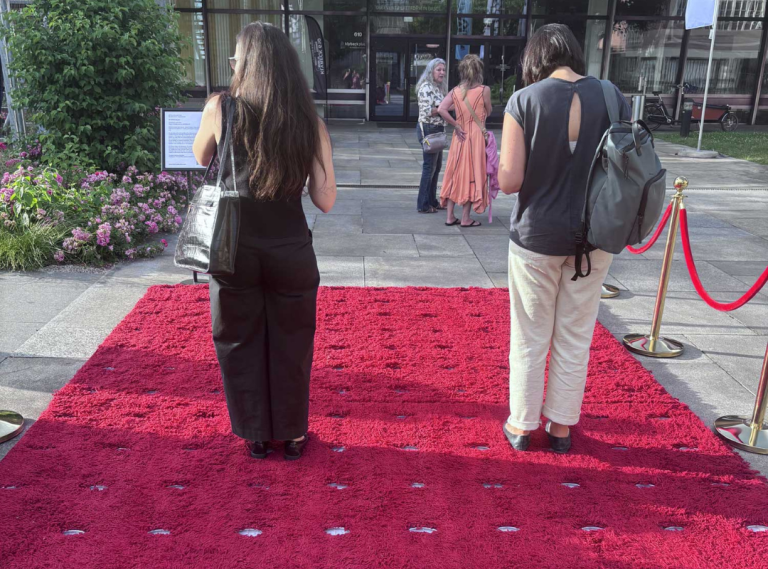
Yet the experience did not stop at the exhibition spaces. One of Africa Basel’s distinctive traits lies precisely in its Special Projects, which extend the visit in diverse forms and invite the public to cross the fair’s traditional boundaries. The Red Carpet, a participatory installation conceived by Youssef Ouchra, welcomed visitors at the entrance to the building, détourning the codes of the red carpet into a playful device that gently questions the visitor’s place within the art ecosystem. The exhibition Beat Apartheid, bringing together works, archival material and documents around the cultural legacy of the anti‑apartheid struggle, recalled how artistic creation can also be a space of memory and resistance. As for Art World Passport by Richard Mudariki, the project invited visitors to have a symbolic passport stamped between an “Embassy” in the city and a “Consulate” inside the fair, turning the visit into an exploration punctuated by stations and encounters. Without breaking the thread of the route, these proposals enriched the experience, introduced other forms of participation and multiplied entry points into the works.
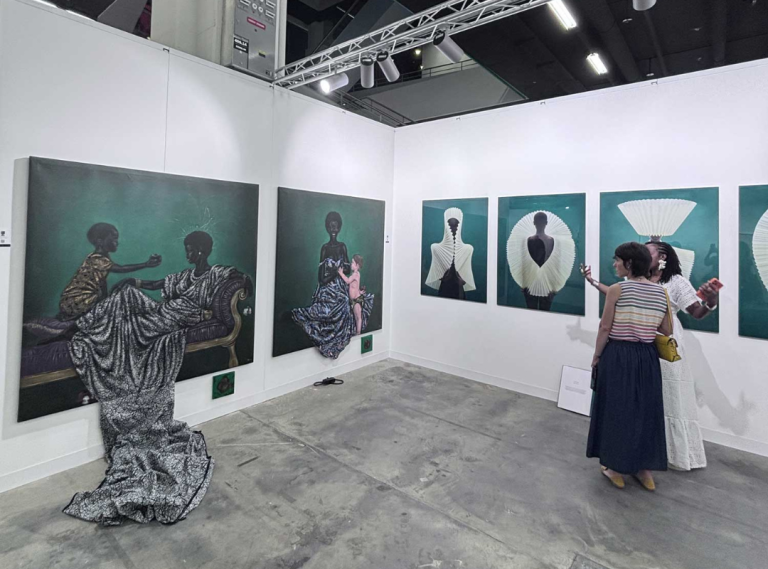
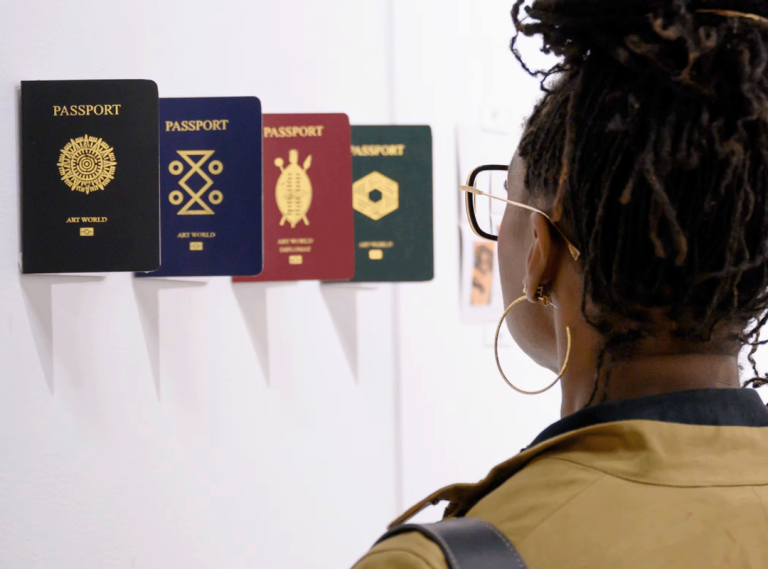
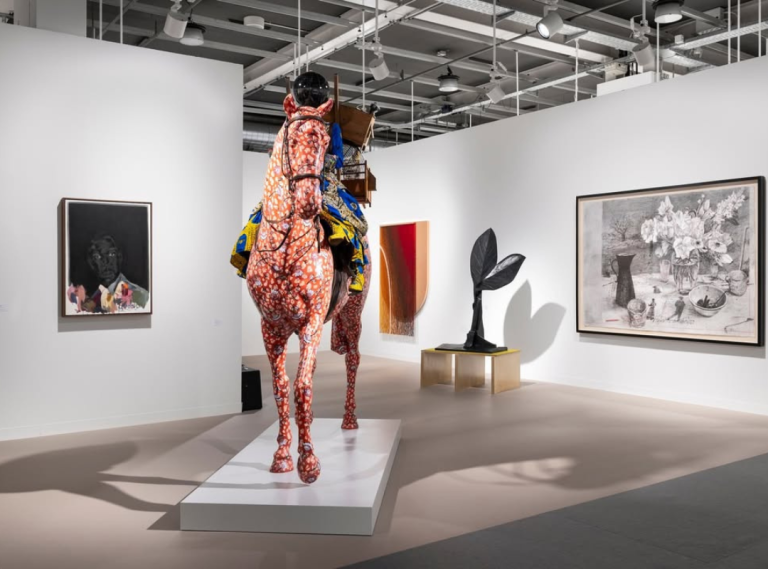
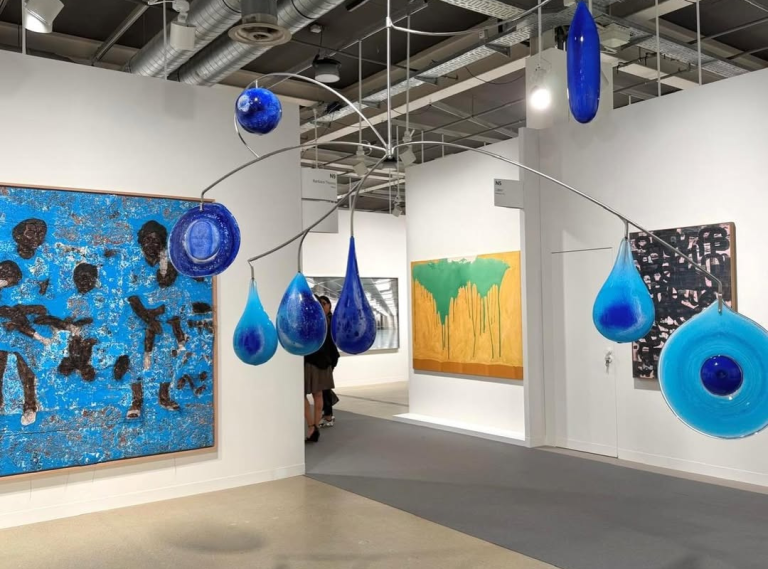
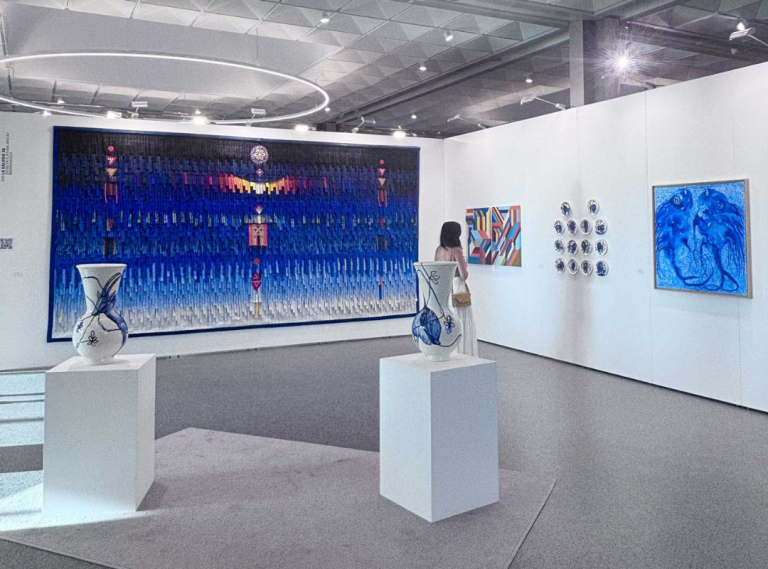
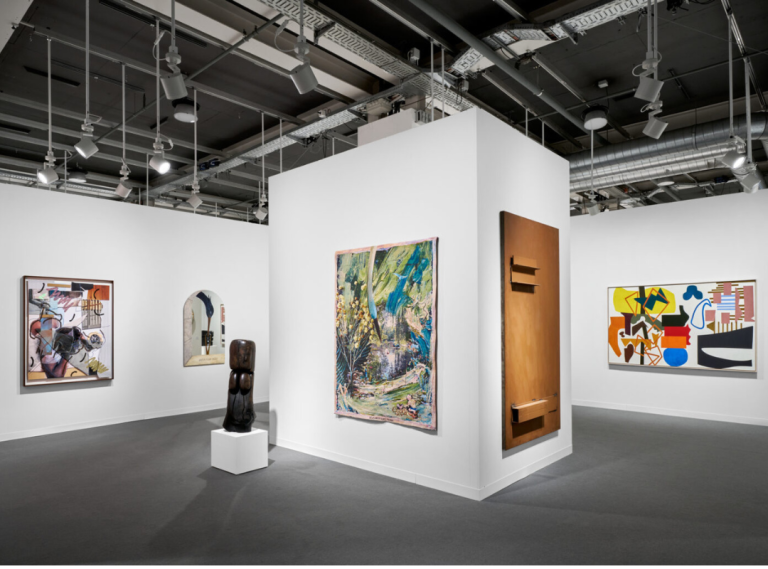
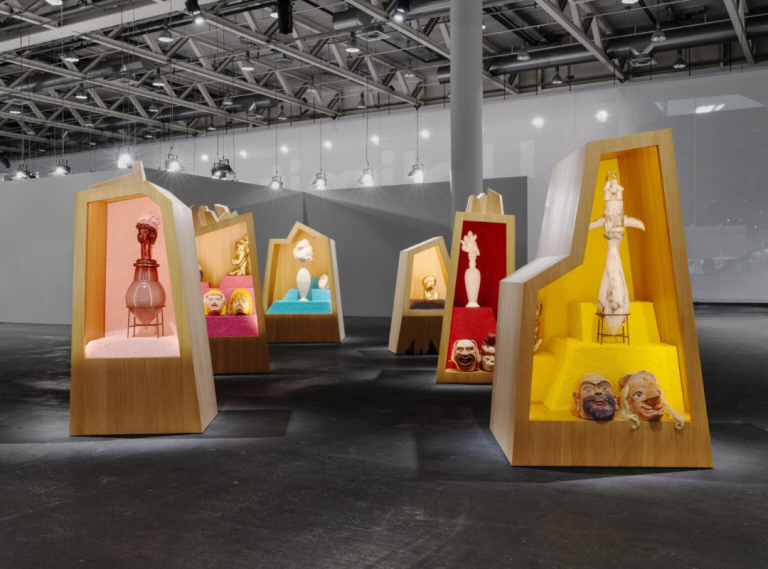
This ability to alternate contemplation, participation and discovery is arguably one of Africa Basel’s most remarkable achievements. Works are no longer confined to walls and plinths; they overflow their exhibition frame to engage with history, the urban space and visitors themselves. The aim is no longer simply to look, but to gradually live an experience in which each stage prepares the next.
An Intellectual Hospitality
At Africa Basel, the journey does not end in front of the works. It continues in spaces for discussion that invite artists, curators, gallerists, collectors and visitors to confront their perspectives on the major questions shaping contemporary African creation. The Africa Basel Conversations form the core of this intellectual programme, with round tables devoted to issues such as the art market, the role of institutions, diasporic art scenes and new curatorial practices. Among the themes addressed, Beyond the White Cube notably invited participants to consider the conditions of production, exhibition and reception of works as much as their forms.
Alongside these structured encounters, the Fountain Talks favour a freer, more spontaneous format. Held throughout the day, these conversations encourage direct exchanges in a setting that privileges proximity over the traditional lecture format. This alternation between in‑depth debates and more informal contributions naturally extends the spirit of the fair: accompanying discovery without ever fixing the works in a single discourse.
Part of these exchanges is recorded and disseminated as podcasts and digital content, inscribing the conversations into a longer temporality. The reflections initiated in Basel thus continue to feed debates well after the fair closes, reaching an audience that extends beyond those physically present. This form of intellectual hospitality, which grants as much importance to ideas as to artworks, is undoubtedly one of the fair’s most distinctive signatures.
In just two editions, Africa Basel has established itself as one of the most striking initiatives of Basel Art Week. Without seeking to rival the major international fairs in terms of scale, it has affirmed an identity grounded in the coherence of its project. At a time when art fairs are often faced with the challenge of capturing ever more attention, Africa Basel makes a quieter, and perhaps more sustainable, wager: that of slowing the gaze. By privileging time for discovery, exchange and reflection, it proposes a different way of approaching contemporary African and diasporic art – as a field of creation fully embedded in today’s artistic debates.