“Web” for Internet, “toon” for cartoon: webtoon is defined as a digital comic specifically designed for reading on smartphones or tablets. Straight from Korea, where it enjoys massive success, webtoon is beginning to establish itself in Africa.
It is in this context that Dupuis Publishing and the ONO Afrique webtoon platform have launched a call for projects to discover the African webtoon talents of tomorrow. Named Afrotoon, the initiative invites young scriptwriters and/or illustrators to apply by May 15, submitting their portfolio and pitch. The reward for selected candidates? The opportunity to collaborate on the creation of an original African webtoon series of international quality! The publishers launch this project with the strong belief that African webtoon has a bright future ahead.
African-style Webtoon: high potential ahead
With a very young and hyper-connected population—62% under the age of 25 and 615 million mobile subscribers projected by 2025—Africa provides an ideal environment for the development of webtoons. This is especially true given that traditional printed books face numerous distribution challenges, such as a lack of channels and high prices due to taxes, creating a wide opening for digital formats.
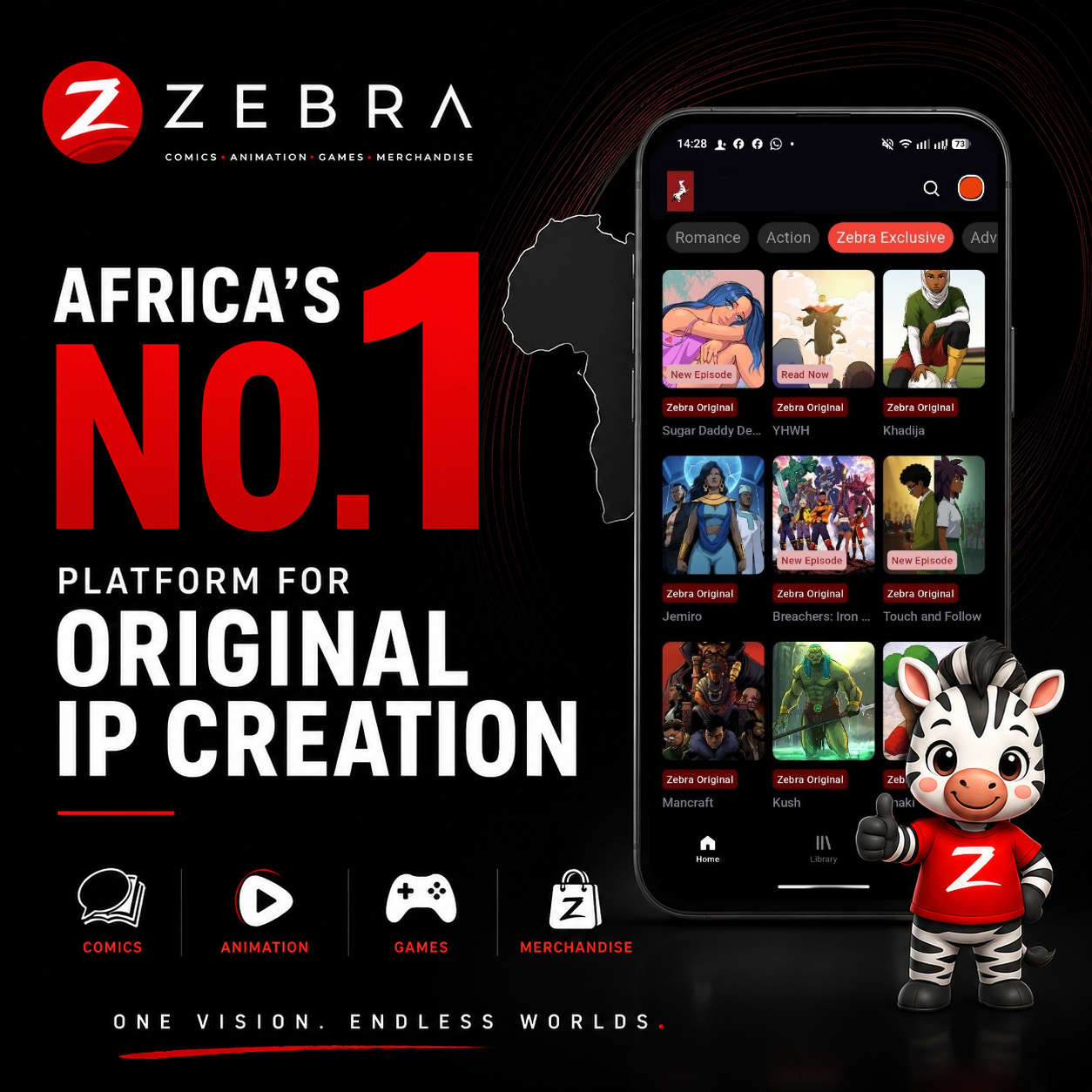
In this context, publishing houses, whether it be Dupuis with its dedicated Moabi catalog or Zebra Comics, a rising Cameroonian publisher, are betting on webtoon’s development. Their ambition? To offer, alongside international bestsellers—especially Korean ones—original African creations, based on African stories and crafted by African authors.
Among the young talents to watch, Rhys Massengo, Anani Accoh, Gunther Moss, Hugues Bertrand Biboum, Paul Monthé, Martini Ngola, An Nina, and Franklin Agogho highlight the potential of African authors. Africa is full of young talents, with an imagination shaped by traditional stories, folktales, and the continent’s rich mythology, along with a natural gift for drawing and color. The challenge now is to train them in storytelling—an essential skill for a successful webtoon and a key factor in developing an African webtoon industry.


Training, Training, Training
At the intersection of comic books and digital literature, webtoon follows very specific codes that African creators must master to compete with Korean authors.
“Scrolling” imposes a precise format: webtoons are designed as long vertical strips, ensuring smooth top-to-bottom reading. Color is crucial, and animations are often included. Another critical aspect is that speech bubbles must be readable in just 3-4 seconds, a real challenge!
Additionally, the episodic structure requires a specific rhythm. Episodes are released on a regular schedule—weekly or biweekly—with the goal of keeping readers hooked between releases. Mastering storytelling techniques such as plot twists, cliffhangers, and suspenseful endings—similar to a good Netflix series—is essential. “This sense of storytelling is often lacking among young African creators,” acknowledges Wladimir Lentzy from Dupuis Publishing, “which is why our training programs focus heavily on it.”
For those fortunate enough to participate, the Webtoon Academy offers top-tier training over five months, including two months in Korea, with instructors from KENAZ, one of Korea’s leading webtoon studios. However, since spots are limited, Wladimir Lentzy has adapted the training into traveling masterclasses to reach a broader audience. In six years, he has already conducted sessions in Brazzaville, Pointe-Noire, Yaoundé, Douala, and Abidjan, offering half-day or full-day workshops depending on participants’ levels. Beginners receive an introduction to the industry, while advanced students get intensive training, including the development of their first storyboard.
Beyond technical skills, Lentzy is pleased that participants are forming a community, fostering exchanges and collaborations. This is just the beginning of an exciting movement, with hopes that numerous African webtoons will soon entertain audiences both in Africa and worldwide—maybe even in Korea!