Parcours des Mondes fosters dialogue between cultures

As every September, Parcours des Mondes gathered in Paris the world’s leading enthusiasts of the arts of Africa, Oceania, Asia, and the Americas for the largest international fair dedicated to non-European arts. For its 24th edition, the event brought together more than sixty galleries and nearly 30,000 visitors in a unique journey spanning Africa, Oceania, Asia, the Americas, archaeology, and contemporary art.

Founded in 2002 in the heart of Saint-Germain-des-Prés, Parcours des Mondes has, over two decades, become a key destination for collectors, gallerists, curators, and seasoned amateurs. Its mission: to foster encounters between cultures, to reveal the richness of artistic expression across five continents, and to broaden our gaze toward heritages long marginalized in the art market. This ambition remained central in 2025, with new and unprecedented dialogues between eras, civilizations, and artistic sensibilities.

A Crossroads of Cultures

The success of Parcours des Mondes lies above all in the richness and diversity of the works on view. Initially centered on African tribal art, the event first expanded to Oceanic and Pre-Columbian art, before more recently embracing Asian arts. This widening scope occurred organically, driven by affinities of form and inspiration. Along the route, resonances emerge clearly—between African, Native American, and Inuit masks, for instance.

The 2025 edition was a vivid illustration of this cultural diversity. Visitors could move from a Kota reliquary figure from Gabon at Galerie Monbrison to a Hopi statuette at Galerie Flak, then discover Inuit and Sámi sculptures highlighted by Galerie Vallois. Galerie Kiyama offered a refined look at Japanese art, while Arte Primitivo presented Native American and Pre-Columbian pieces, and Schoffel de Fabry showcased spectacular works from New Guinea. This mosaic of expressions underscored the fair’s universal vocation: to connect continents through the language of form.

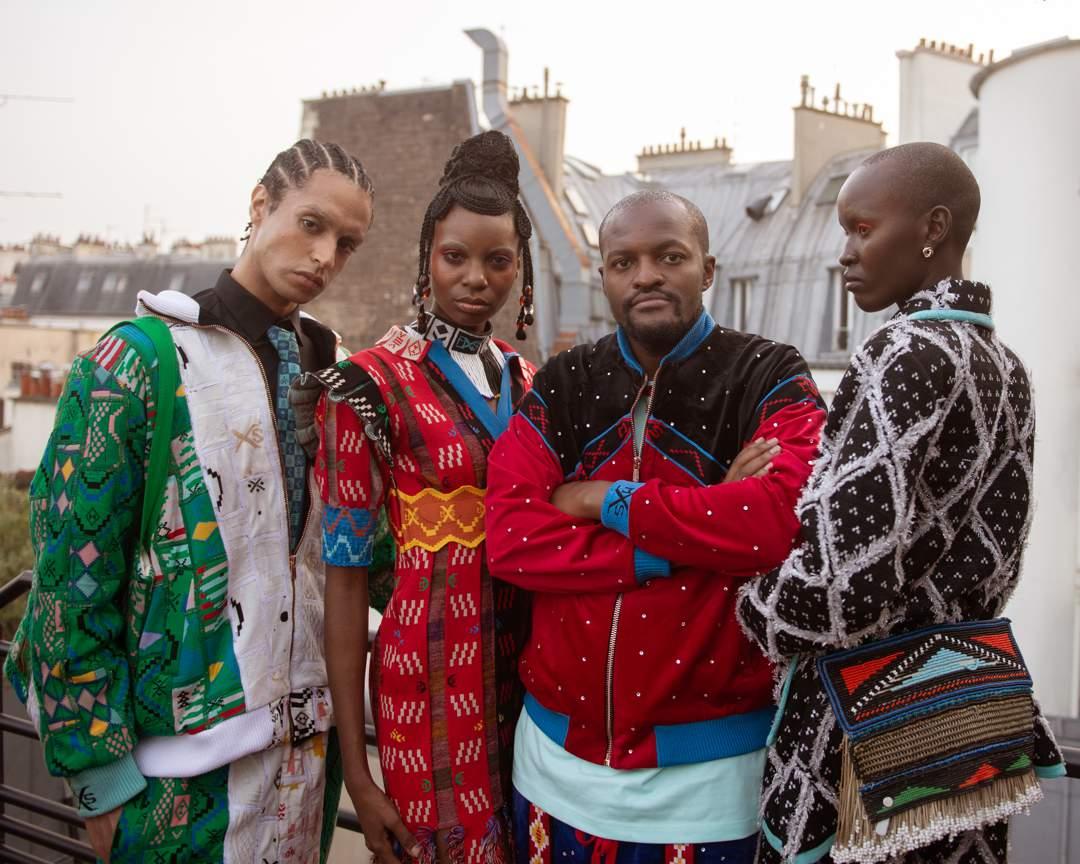
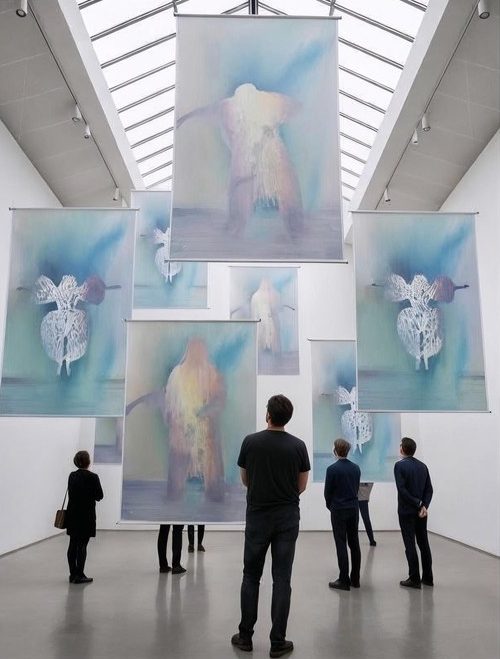
Geographical diversification was paired with historical breadth. The fair now includes archaeological pieces, such as those from Galerie Eberwein, specialized in ancient Egyptian art, while giving growing space to contemporary creation. Several exhibitions staged fertile dialogues between heritage and the present. Galerie Christophe Person presented contemporary African textile works in dialogue with traditional pieces, while Magnin-A juxtaposed the creations of Seyni Awa Camara and Estevão Mucavele with centuries-old sculptures. These encounters highlighted the continuity of creativity between inheritance and modernity—a play of resonances that has become a signature of Parcours des Mondes.

A Unique Format: Part Open-Air Museum, Part Living Market

The singularity of Parcours des Mondes also resides in its extraordinary format. Neither commercial fair nor institutional exhibition, it transforms the Saint-Germain-des-Prés neighborhood each year into an open-air museum. Galleries on rue Mazarine, rue Visconti, rue Jacob, and rue de Seine open their doors free of charge, inviting the public to wander freely from one to the next.

Unlike professional fairs, Parcours des Mondes embraces an educational and inclusive mission. It welcomes experts, families, and students alike, thanks to free access and direct encounters with gallerists. Some presentations reveal rarely seen private collections, such as at Galerie Gradiva, where the exhibition At the Heart of Classical Africa unveiled emblematic masterpieces, including a major 19th-century Kota reliquary. This spirit of sharing makes the event widely accessible.

Yet Parcours des Mondes is not an institutional exhibition either. It is an open experience, where visitors circulate freely without an imposed itinerary. Collectors, curators, and curious passersby mingle in a convivial atmosphere. In this living dynamic, the eclecticism of the works and the absence of barriers reinforce the event’s singularity—affirming it year after year as a hub for dialogue between cultures and arts at the historic heart of Paris.

A Pivotal Edition

The 2025 edition confirmed the event’s growing popularity, attracting nearly 30,000 visitors and benefiting from significant international media coverage. Galleries reported encouraging sales momentum, attesting to the vitality of the non-European art market. The presence of influential figures, such as a curator from the Metropolitan Museum of Art, further enhanced the edition’s prestige.

Framed between two major events—the recent opening of the Arts of Africa, Oceania, and the Americas wing at the Metropolitan Museum of Art in New York and the forthcoming reopening of the Louvre’s Pavillon des Sessions dedicated to non-European collections—Parcours des Mondes has established itself as an essential landmark on the international stage of the arts of Africa and beyond. With the Musée du Quai Branly – Jacques Chirac, Christie’s, and this fair, Paris confirms its status as the world capital of the arts of Africa, Oceania, and the Americas. And the 25th edition, already scheduled for September 8–13, 2026, promises to be a milestone celebration consolidating this position of reference.

More articles on the subject

Share the article
also read
  • All Posts
  • Lifestyle
  • Beauté
  • Culture