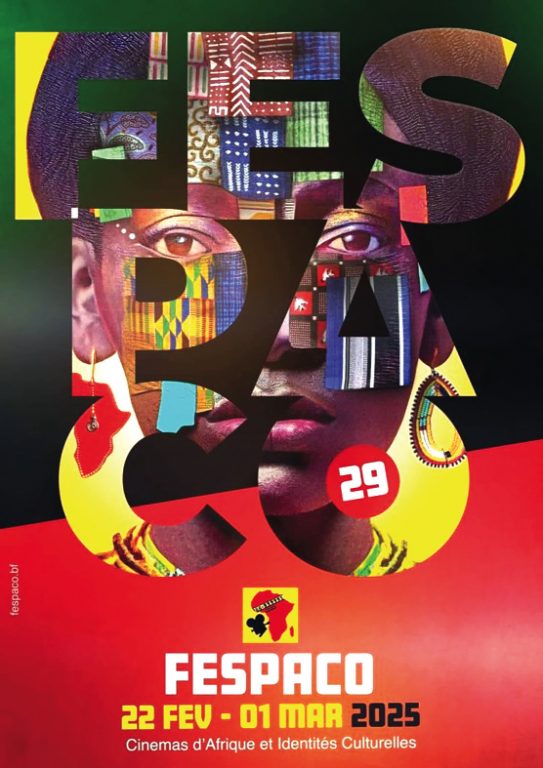
Held under the theme “African Cinemas and Cultural Identities,” the 29th edition of the Pan-African Film and Television Festival of Ouagadougou (FESPACO) honored Chad as its guest country. Despite being organized in a complex context, this edition proved exceptionally vibrant, setting a record for the number of films submitted.
The Edition of All Records
A staggering 1,351 films were reviewed by the selection committee (including 258 feature-length fiction films, 286 feature-length documentaries, 611 short films, and 79 series), with 235 films from 48 countries making the final cut.
On the professional side, the International Market of African Cinema and Television (MICA) was equally active, with over 200 participants in post-production, co-production, and heritage workshops, and 33 presentations from 13 countries featured in a symposium bringing together researchers and professionals.
And the Winners Are…
The much-applauded winner of this edition was Burkinabè director Dani Kouyaté, who took home the Étalon d’or de Yennenga (Golden Stallion of Yennenga), the festival’s top prize, for his film Katanga, La Danse des Scorpions (Katanga, The Dance of the Scorpions), a political fable inspired by William Shakespeare’s Macbeth. The film’s bold choices—shot in the Mooré language and in black and white—earned it praise for its “timeless and universal character” and “strong cultural grounding,” according to jury spokesperson Martin Zongo. This marked the third time a Burkinabè filmmaker has won the trophy since the festival’s inception, and the first since 1997. Notably, Katanga, La Danse des Scorpions also won the Audience Award, recognizing the film with the highest attendance and viewer votes.
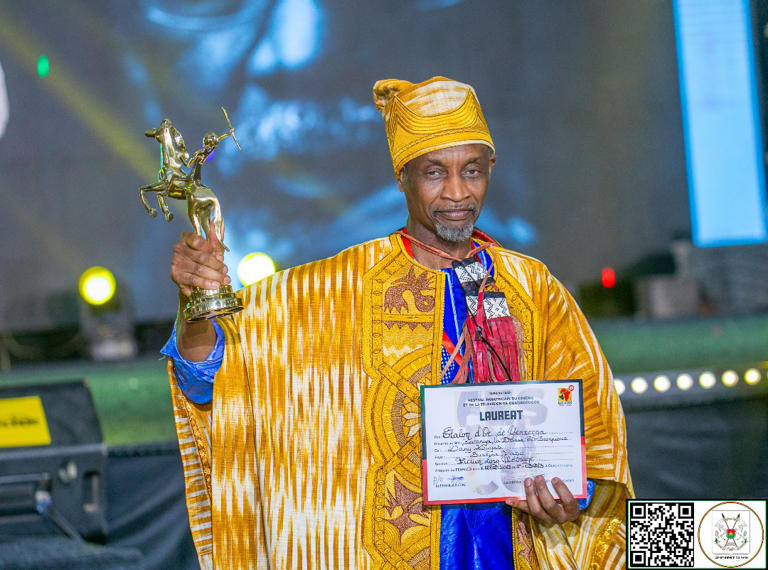
The Étalon d’argent (Silver Stallion) went to The Village Next to Paradise by Somali director Mo Harawe, while the Étalon de bronze (Bronze Stallion) was awarded to On Becoming a Guinea Fowl by Zambian director Rungano Nyoni.
In the feature-length documentary category, the Étalon d’or was awarded to Guadeloupean filmmaker Malauray Eloi Paisloy for L’Homme Vertige (The Man-Vertigo), a film dedicated to Pointe-à-Pitre, which has become a ghost town. The work was doubly honored, also receiving the Paul Robeson Award for Best Film of the Diaspora, a new addition to the 2025 edition. Other documentary winners included Tongo Saa / Rising Up at Night by Congolese director Nelson Makengo and Loin de Moi la Colère (Far from Me, the Anger) by Ivorian director Joël Akafou, who took home the silver and bronze awards, respectively. Finally, a new prize was introduced this year: the Thomas Sankara Award, designed to honor producers or directors whose work promotes the values of Pan-Africanism. The inaugural award went to Our Land, Our Freedom, a Kenyan production by Meena Nanji and Zippy Kimundu.