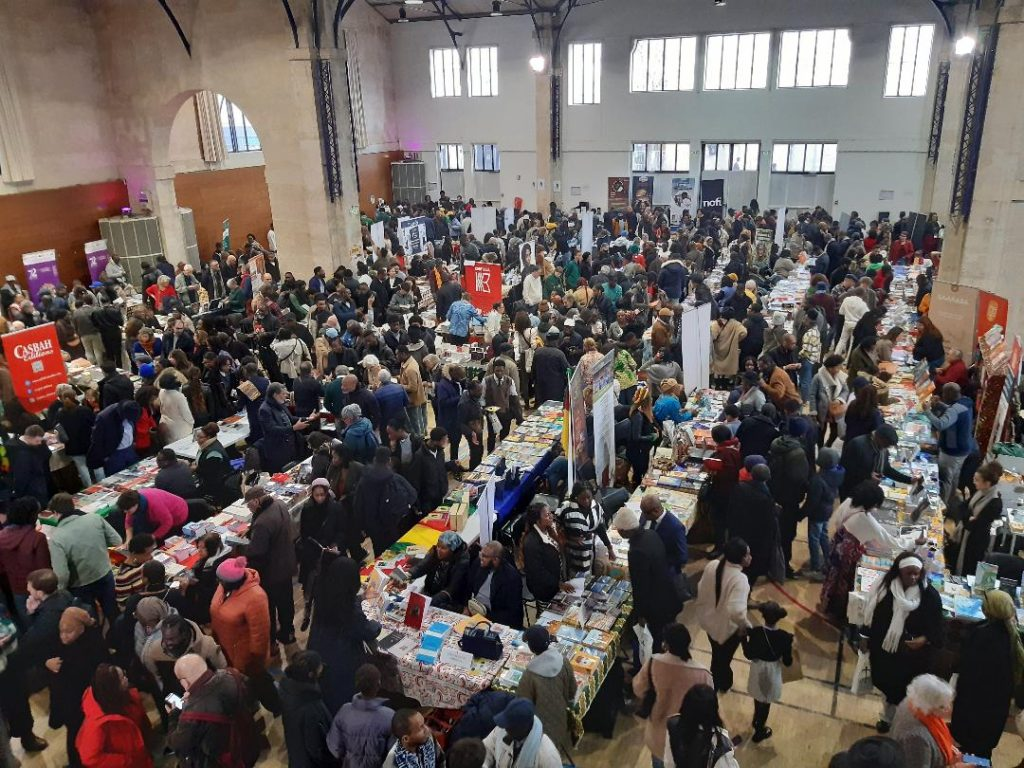
The Paris African Book Fair will be remembered primarily for its attendance: in the aisles, behind the stands, at the round tables, the event was packed. The organizers made the right choice by opting for the vast space of the Halle des Blancs Manteaux, just big enough to accommodate the crowd of professionals and enthusiasts united by a common passion for literature.
A Literary Sector in Effervescence
Africa is a continent that cherishes the spoken word; if proof were needed, this fair would suffice. Facing the 8,000 expected visitors, about sixty publishers and more than 200 authors were represented, from across the continent and the diaspora. The linguistic variety added to the event’s exuberant dimension with books in local languages and bilingual editions paying homage to the approximately 1,800 languages spoken across the continent.
The most varied genres rubbed shoulders on the stands: novels, short stories, essays, theater, poetry, children’s literature, and even fantasy, not to mention more disruptive genres like African-style manga with the adventures of young Sanka by The Last Kamit. It was interesting to note that many authors had signed works in different literary genres, blurring the boundaries of literary inspiration.
Alongside traditional paper books, new formats had made their appearance, developed by the younger generation. Notably, there was the presence of a pan-African startup, FCaudioEdit, which has developed a high-quality audiobook application offering a wide catalog of works. A podcast-like approach designed to attract an audience more keen on TikTok than books. Digital was also in the spotlight, with, for example, children’s books incorporating QR codes to enrich young readers’ experience and make them learn while having fun.
Issues Under Debate
In the fair’s aisles, business cards were exchanged left and right, exhibitors readily called out to visitors. It was time for networking, for authors and publishers alike, on the lookout for partners to support them in the challenges of publishing. Moreover, many of them wore the double hat of author and publisher, a sign of the challenges in the African literary sector.
To debate these challenges, a full half-day of presentations, training sessions, meetings, and exchanges of best practices had been organized for professionals. Among the topics discussed: copyright, local book promotion, and digital discoverability.
These debates will continue in the context of future book fairs scheduled in the coming months across the continent, from Guinea Conakry to Ivory Coast and Gabon.