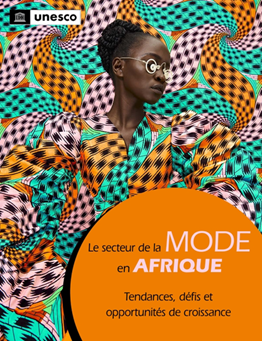
While fashion is taking off in Africa, its potential is still considerable, the UNESCO report reveals! A major challenge both in terms of the economy and for the integration of young people, the empowerment of women and the cultural influence of the continent throughout the world.
The fashion sector in Africa: trends, challenges and opportunities for growth, this UNESCO analysis shows that the continent has all the cards in hand to become a future world champion of fashion. It is a major producer of raw materials (37 out of 54 countries produce cotton), exporter of textiles ($15.5 billion per year) and importer market ($23.1 billion per year).
The continent is also experiencing a new and growing infatuation for-Africa especially among young people – those under 25 make up 50% of the continent’s total population – and in a booming middle class – already more than 35% of the population – opening up new consumer markets. Africa is also experiencing very rapid growth in the digital sector, which facilitates intra-African trade and the outreach of young talent.
As evidenced by its 32 fashion weeks organized each year, Africa is also full of talents in the field of haute couture, crafts and clothing. The demand for African haute couture is expected to increase by 42% over the next 10 years.
In order to fully exploit this immense potential, governments and decision-makers and professionals in the sector face four challenges, starting with strengthening the legal protection of creators and professionals and investing in small and medium enterprises, which now represent 90% of the fashion sector in Africa. Setting exemplary environmental standards is also crucial. While the fashion industry remains one of the most polluting, Africa can make greater use of local materials, innovate around sustainable textiles, and raise awareness about sustainable consumption patterns; Organic cotton fibre production has already increased by 90% between 2019 and 2020, and the second-hand clothing market is one of the most dynamic in the world – a third of global imports. Last but not least, the transmission of know-how and training remains an essential issue. Africa has traditional know-how and textile techniques that are unique in the world – but mentorship is needed to ensure these practices pass from generation to generation and continue to inspire young designers.