With Kabarin-javakanto, Abdellah Karroum offers a vibrant reading of contemporary African art inspired by the Malagasy kabary. A narrative in which artworks engage in dialogue, respond to one another and redraw the circulations between Africa, its diasporas and the international scene.
Since opening on April 24, 2026, the exhibition has attracted large audiences to the renovated building that now houses Fondation H. With free admission, the venue has seen a steady flow of visitors — proof that contemporary art can find a broad audience in Antananarivo when conceived as a space for encounter rather than a simple exhibition venue.
Dialogue as a Curatorial Principle
Through a selection of 56 works by 41 artists, Abdellah Karroum proposes an engaged reading of Fondation H’s collection. The exhibition title itself provides the key to understanding it. Kabarin-javakanto draws inspiration from the kabary, a form of oratory central to Malagasy social life, used during ceremonies, negotiations and collective decision-making. A codified form of speech, structured around proverbs and metaphors, that organizes exchange as a relational space.
Transposed into the exhibition, the kabary inspires Karroum to create a three-part journey conceived as a narrative progression: first, an introduction that sets the gaze in motion; then a denser, almost labyrinthine space where connections multiply, like a cabinet of curiosities; and finally, an opening towards more monumental forms and future perspectives.
The exhibition follows neither chronology nor strict thematic logic. Instead, it unfolds through resonances. The works operate within a logic of conversation, where each intervention extends the previous one and prepares the next. The exhibition becomes a collective discourse made of echoes, repetitions and circulations.
In doing so, it weaves correspondences across generations and geographies. Malagasy artists such as Joël Andrianomearisoa and Arilala Ophelia Ralamboson appear alongside major figures from the continent and its diasporas, including Abdoulaye Konaté, El Anatsui and Ibrahim Mahama. In counterpoint, a number of international voices — among them Alighiero Boetti and Shahzia Sikander — broaden the field of resonances beyond the African continent.
The collection reveals the diversity of contemporary practices. Abdoulaye Konaté’s textile installations impose their silent density, while El Anatsui’s accumulations unfold an almost organic monumentality. Lee Bae’s charcoal-blackened surfaces absorb the gaze, while Ghada Amer’s compositions introduce another kind of tension, more intimate in nature. Moffat Takadiwa’s assemblages extend a reflection on the transformation and circulation of materials, while Ibrahim Mahama works at an architectural scale, engaging the visitor’s body within the space.
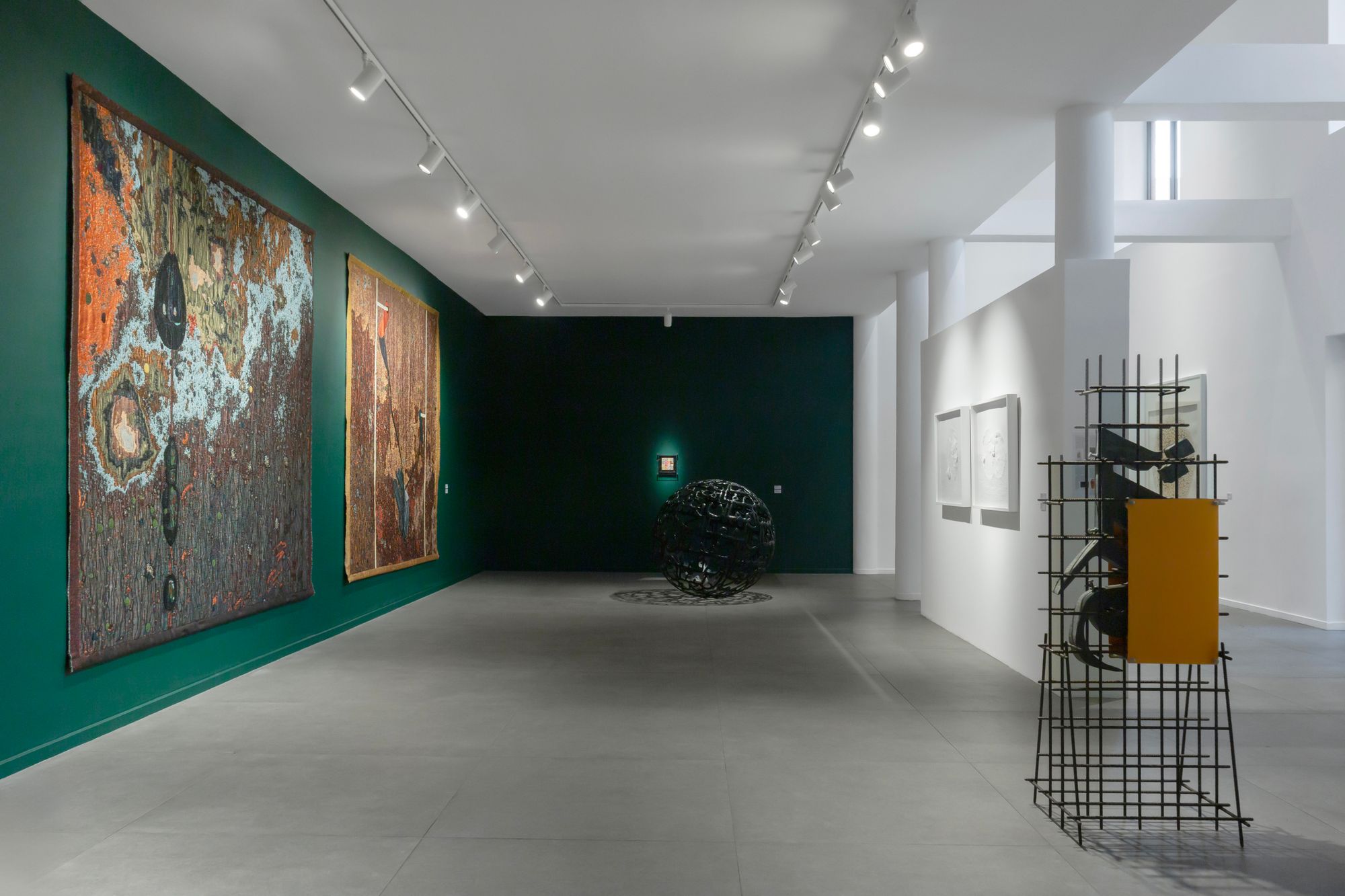
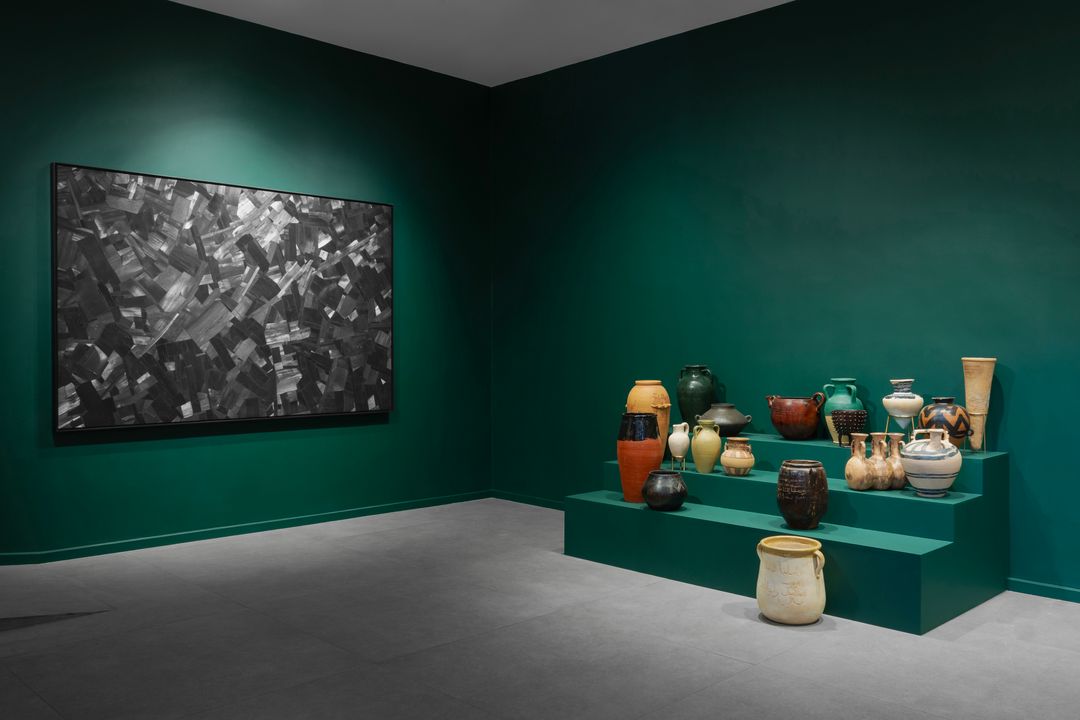
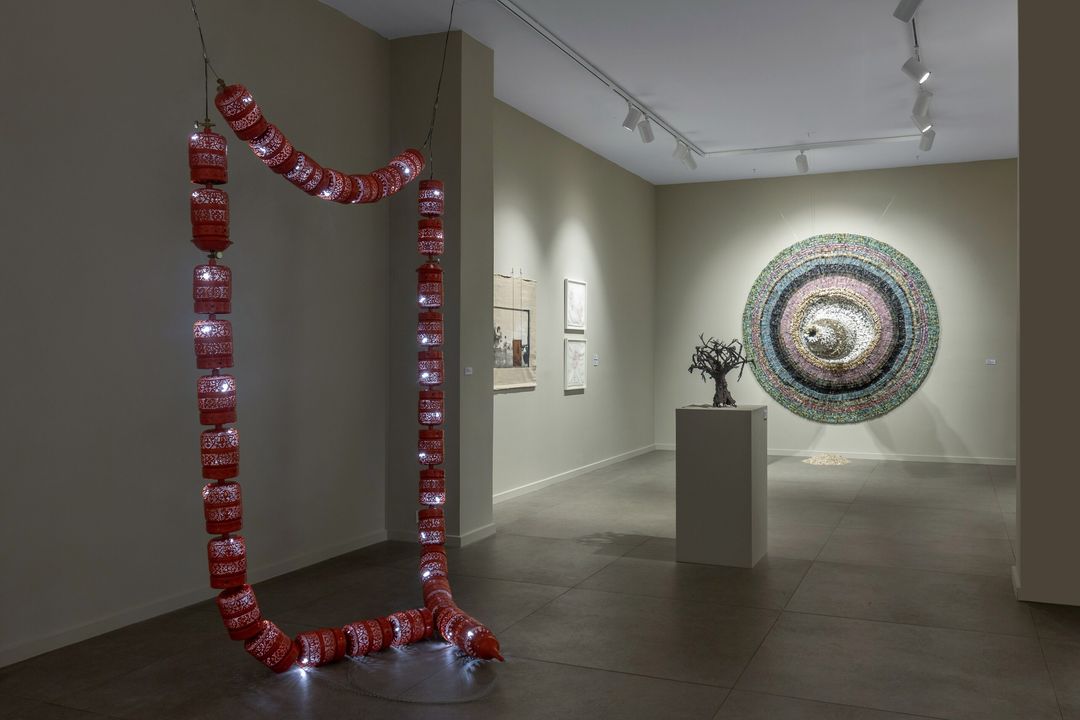
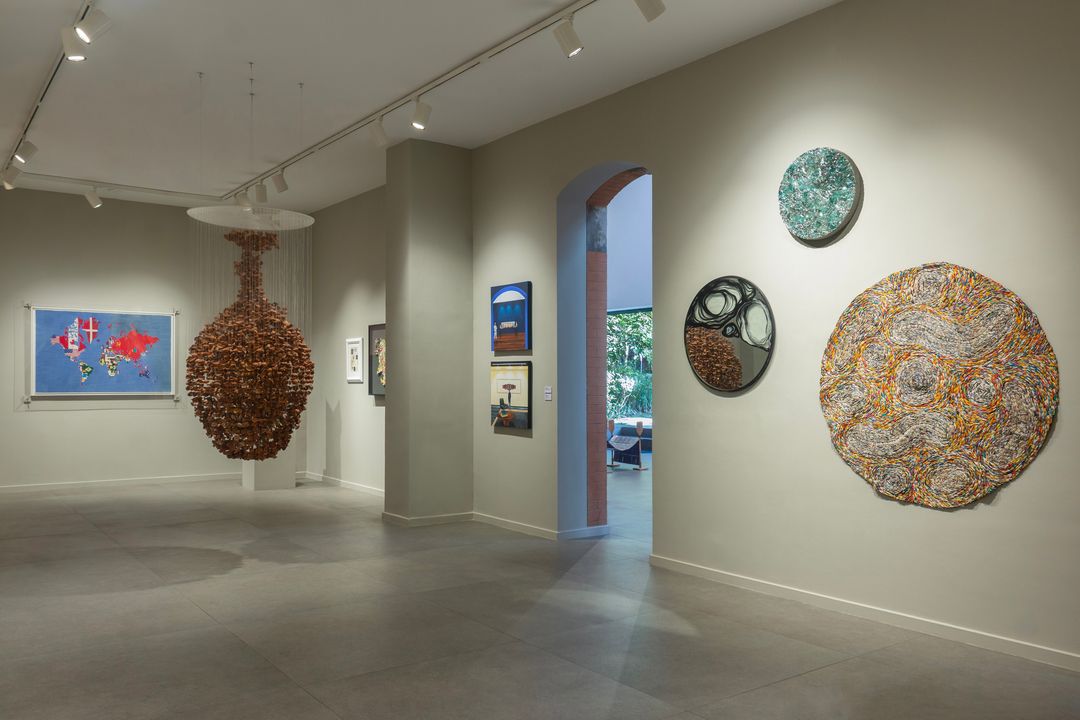
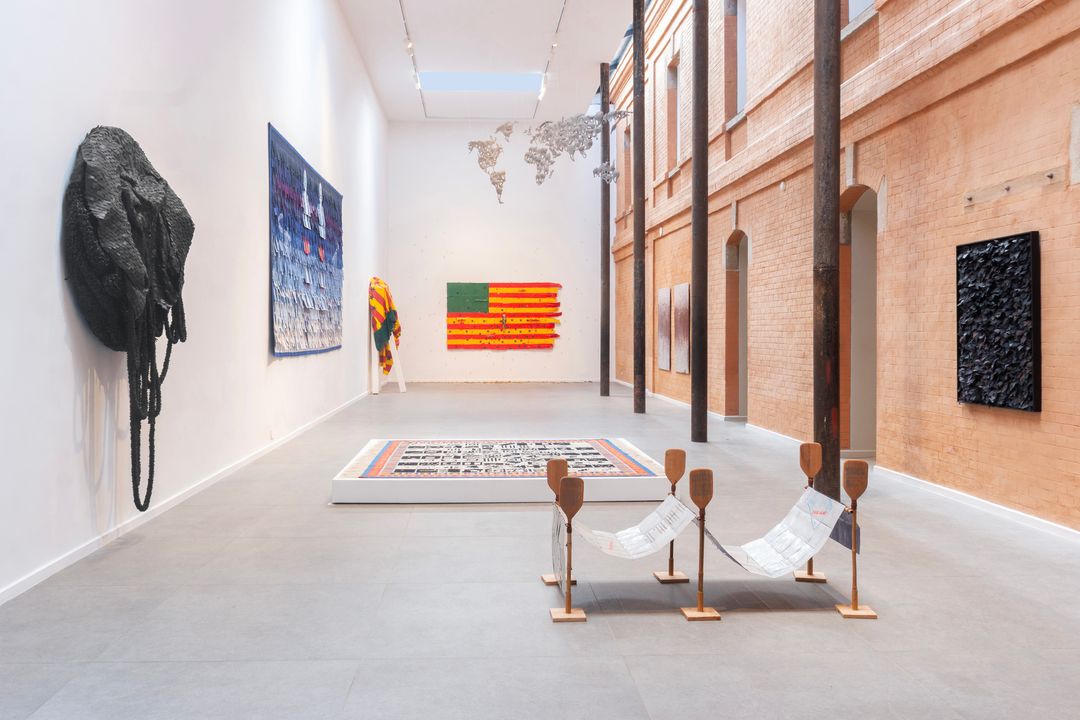
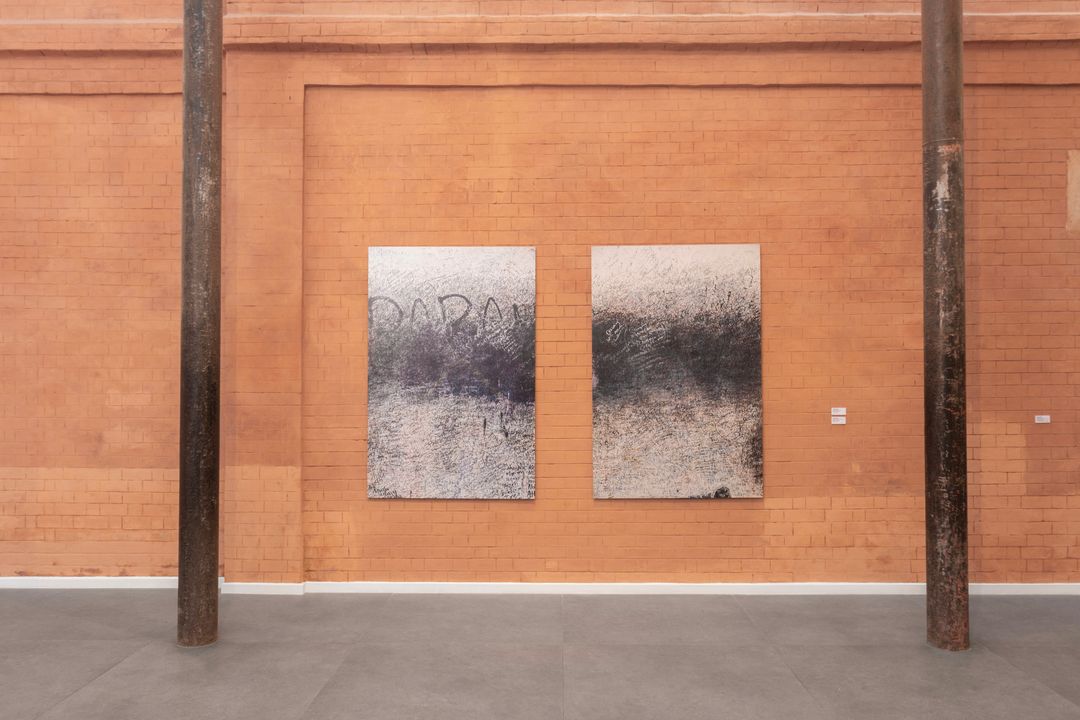
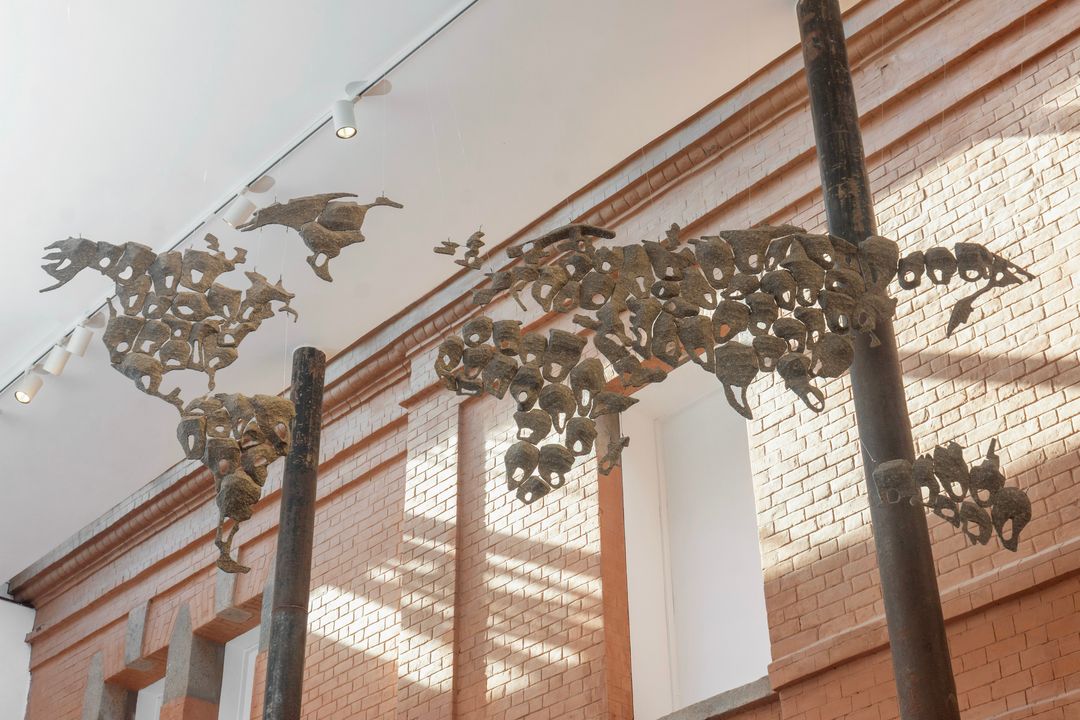
Behind this diversity, major themes emerge: memory, notably explored by M’barek Bouhchichi and Lee Bae; circulation and borders, visible in Odur Ronald’s embossed aluminium plates; transmission and cultural heritage, which run throughout the exhibition. These lines of force leave room for an open reading, between individual and collective memory.
A Place for Transmission
If Kabarin-javakanto resonates so strongly, it is also because it is rooted in a place conceived as an experience in itself.
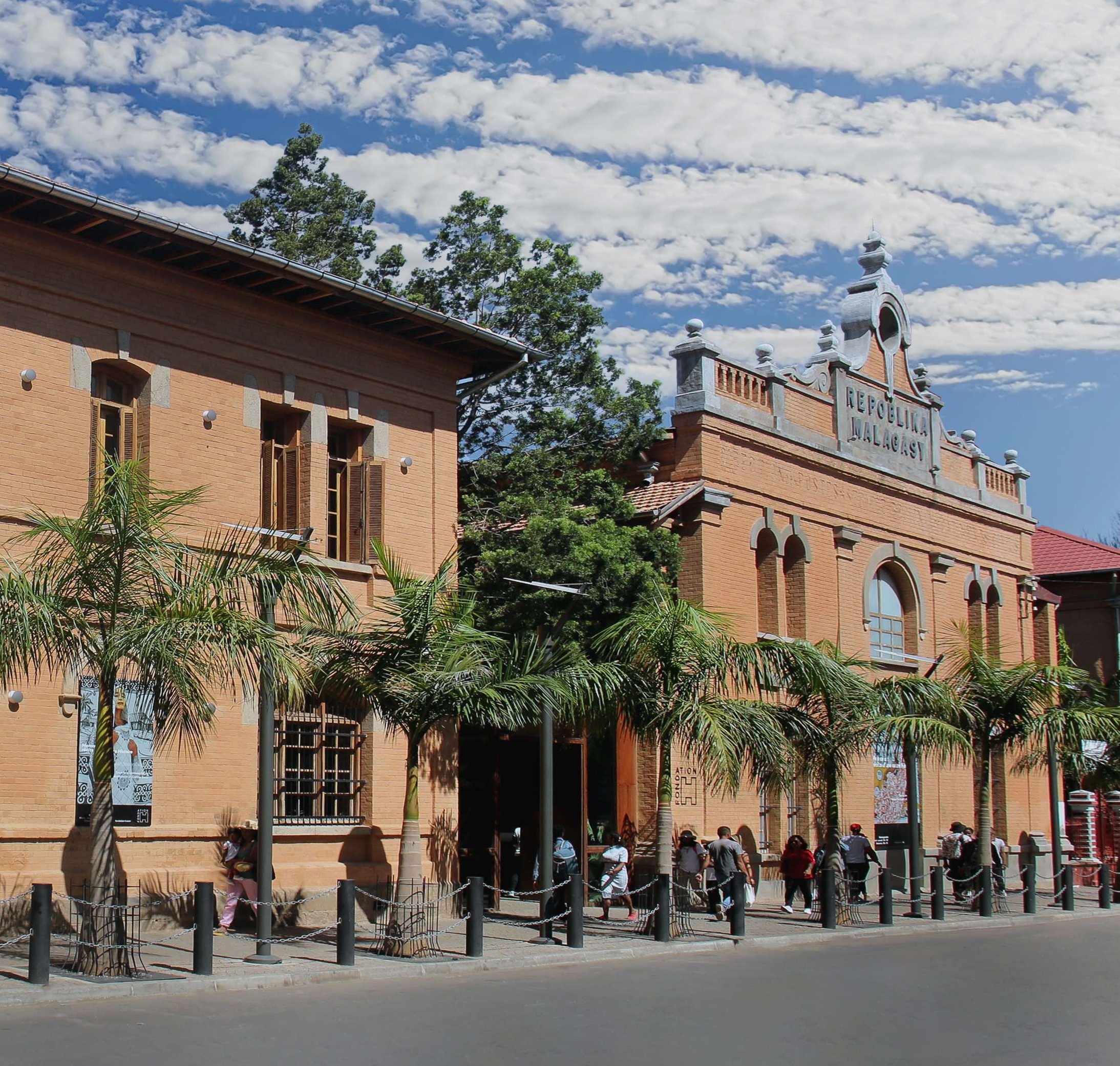
Located in the heart of Antananarivo, Fondation H occupies a fully renovated former Post and Telecommunications building. Spanning 2,200 square metres, the project combines the charm of a historic building with contemporary uses. Particular attention has been paid to sustainability issues, with solar-powered electricity and an architectural design conceived to encourage natural air circulation and reduce the need for air conditioning.
In a country with no public museum dedicated to contemporary art, Fondation H occupies a singular position. It is one of the very few spaces in the capital entirely devoted to contemporary creation, where Malagasy, African and international artists intersect.
Alongside Kabarin-javakanto, visitors can currently discover Renouer les tresses de son identité, a textile installation by young artist of Malagasy origin Chloé Soafaniry Ramanankasina, on view until May 30, 2026, as well as Les mains des poètes, a solo exhibition by Moroccan artist M’barek Bouhchichi, running until October 17, 2026.
A mediation team accompanies visitors throughout the exhibition spaces in order to facilitate encounters with the works. Around this programme, Fondation H also develops guided tours, workshops and educational activities, particularly aimed at younger audiences — formats that extend the experience and situate exhibitions within a longer process of transmission and exchange.
But the venue extends far beyond its exhibition spaces. A media library, garden, café, resting areas and circulation spaces form a hybrid environment conceived as much as a place to live as a place for art. People come here to see an exhibition, but also to read, work, exchange ideas or simply spend time.
This openness is reflected in its uses. Free to access, the foundation welcomes between 12,000 and 15,000 visitors every month, nearly 80% of whom are under the age of 25. Attendance figures that speak as much to the curiosity of audiences as to their gradual appropriation of contemporary art.
In this context, Kabarin-javakanto naturally takes its place within a venue where exhibitions move beyond simple display to become experiences of discovery and transmission.
Shaping an African Cultural Space from Madagascar
Beyond the exhibition itself, Kabarin-javakanto highlights a deeper transformation: that of Fondation H into a structuring cultural institution on an African scale.
Created in 2017 by Hassanein Hiridjee and recognized as a public-interest institution in 2018, the foundation was born out of the lack, in Madagascar, of structures capable of sustainably supporting local artists.
Since then, Fondation H has progressively built an ecosystem combining support for artistic creation, transmission and international circulation.
One of its core missions is to support the emergence of a still-developing contemporary Malagasy scene. The foundation actively supports artists through initiatives such as the Prix Paritana, which annually rewards Malagasy artists or artists based in Madagascar, as well as residency programmes and studio spaces made available in Antananarivo. The Ainga programme also provides artists with professional support designed to help structure their careers.
This local dynamic is accompanied by a strong international outlook. Fondation H develops collaborations with international institutions, artists and curators, lends works for exhibitions abroad and hosts exhibitions in Antananarivo by internationally recognised artists.
Within the African landscape, Fondation H is part of a broader movement of private initiatives contributing to the structuring of the continent’s contemporary art scene, from Benin to Senegal and South Africa. Yet its anchoring in Madagascar gives it a singular position from the Indian Ocean.
Kabarin-javakanto ultimately appears as a synthesis of this ambition. The exhibition does more than display a collection. It reveals how, from Madagascar, an institution can produce its own narratives, its own circulations and its own spaces of transmission.
And, as in a kabary, it does so by weaving connections — between works, between histories, between territories.