When the first volume of Aya of Yopougon was published in 2005, nothing predicted the series’ extraordinary success. A comic set in a popular neighborhood of Abidjan, focused on women’s lives, told with humor and no apparent spectacle — the concept seemed modest.
And yet, nearly twenty years later, the series has become a classic. At a talk held during the African Book Fair in Paris, its author, Marguerite Abouet, reflected on the origins and transformations of a project deeply anchored in personal experience, yet decisively open to the world.
For Aya of Yopougon is more than an editorial success: it is a work that shifted perspectives, offering a new way to tell Africa’s stories — from the inside, through the richness of everyday life.
The Bet on Authenticity
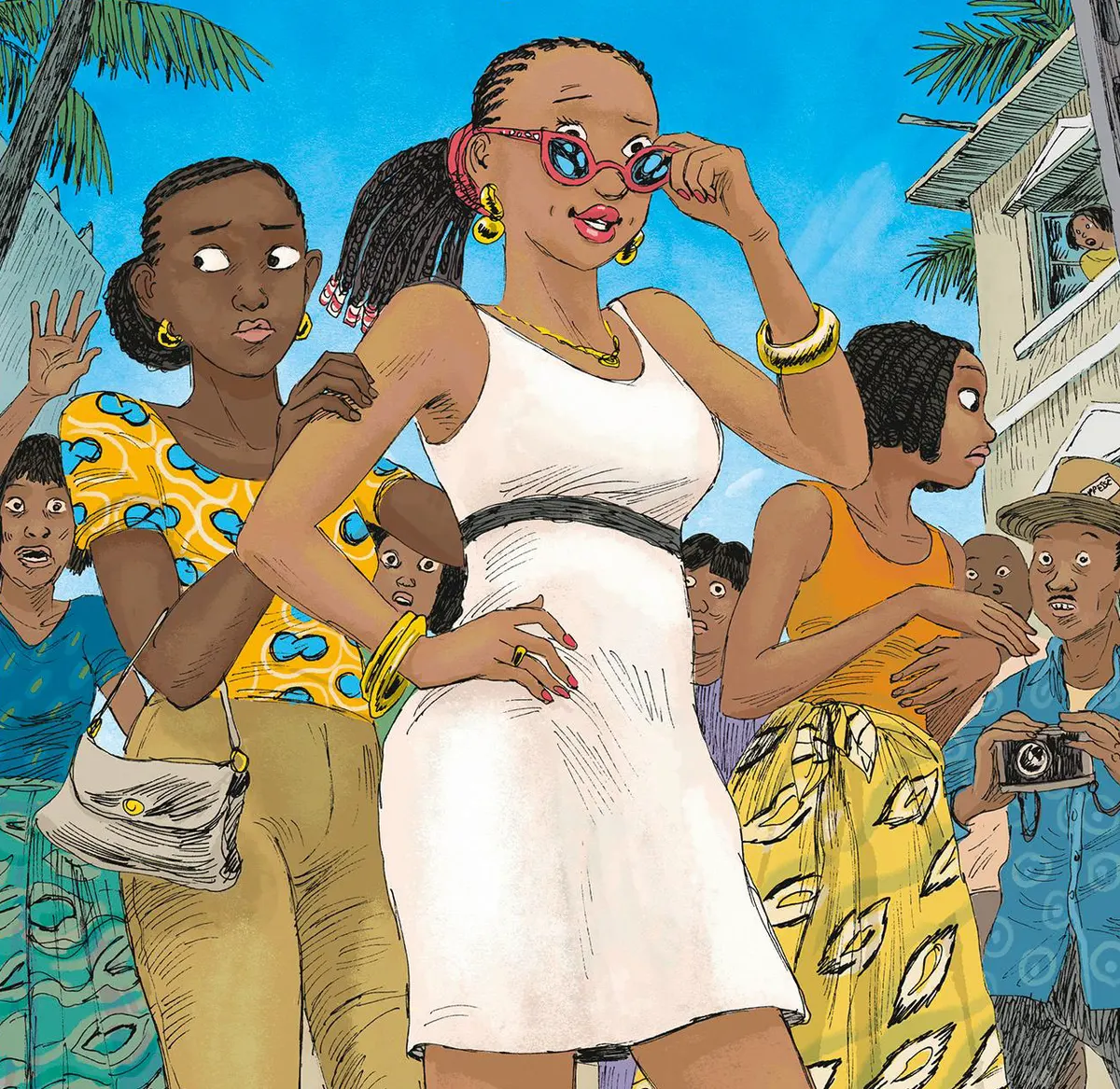
Entering Aya of Yopougon is like opening the gate to a lively courtyard. You can smell the ndolé cooking, hear Adjoua and Bintou laughing, and listen to Aya’s father scolding her. Since 2005, Marguerite Abouet and Clément Oubrerie have placed eight volumes in this Abidjan neighborhood at the end of the 1970s. Aya, 19, wants to become a doctor. Her friends prefer dances and flirts. Félicité sews, Innocent flirts, neighbors gossip. A million copies later, the series has left a mark in readers’ memories.
What strikes most is the truthfulness of the portrayal. Marguerite Abouet pours in her memories: she grew up in Yopougon until she was twelve. Aya draws on her mother, a respected figure in the neighborhood, and also on a neighbor — beautiful and independent despite an authoritarian father. The nouchi, an Ivorian slang born in the streets of Abidjan and nourished by French, local languages, and popular invention, gives the dialogue its unique energy. It carries rhythm and musicality that immerse the reader. You feel the dust of the alleys, the tensions around the family table, and the young characters’ yearning to escape.
Readers embrace these ordinary lives that defy stereotypes: an urban, vibrant Côte d’Ivoire, where people laugh at unexpected pregnancies as much as thwarted ambitions. Aya captivates because she exists. Because she wants to choose her own life. Because we all want, a little, to be Aya.
Uncompromising Universality
Yet this story of an Ivorian neighborhood travels far. As early as 2006, the Angoulême Festival awarded the first volume — the first sign of a destiny that would quickly extend beyond borders. Translated into around fifteen languages — most recently Vietnamese — Aya of Yopougon reaches bookshelves around the world.
Translation is a real challenge. How can one convey a language like nouchi, with all its nuances and humor? The English version, adapted by Edwige Renée Dro, shows how: it is not a word-for-word translation but a recreation of energy. Nouchi is not simply transposed; it is reinvented.
In 2013, the first two volumes were adapted into an animated film. Dubbed in 17 languages and presented at international festivals, the film introduced the series to a new audience. Clips even circulate in Wolof on social media. Orality, already central to the comic, takes on another dimension: voices, intonations, and extended silences convey what the page only suggested. Aya scales up. It is no longer just a comic traveling abroad; it is a universe that circulates, evolves, and transmits.
At the Paris fair, Marguerite Abouet summed it up simply: “I write for all audiences.” And it works. Behind the Ivorian backdrop are friendship, desire, controlling parents, dreams of the future — emotions that resonate everywhere. Like Americanah by Chimamanda Ngozi Adichie or Frère d’âme by David Diop, Aya of Yopougon proves that a very local story can resonate worldwide without compromising itself.
A Pioneer of the Ninth Art
In Côte d’Ivoire, before Aya of Yopougon, comics existed but were often limited to caricature or educational tools. The ninth art primarily served a utilitarian purpose. In 2005, Marguerite Abouet shifted the frame. She dared to tell intimate, feminine, and modern stories. Eight volumes later, she changed the game.
Today, the continent is flourishing with new formats: Ivorian webtoons, Nigerian manga, vertical smartphone series. Studios like Kugali Media in Ghana or Kenessas in Senegal tell stories of African superheroes, cyberpunk princesses, and contemporary romances. Young creators no longer imitate; they invent. They know a story from Abidjan can fill Cannes theaters. That a local slang can make Hanoi laugh. Aya of Yopougon showed them the way.
Last weekend in Paris, before 400 authors at the African Book Fair, Marguerite Abouet embodied this quiet revolution. Her neighborhood became a model. Her comic, a milestone. Yopougon speaks to everyone. And African comics, empowered by this audacity, are inventing their future.