A rising figure on the contemporary African art scene, Eniwaye Oluwaseyi belongs to a generation of Nigerian artists reshaping figurative painting by infusing it with emotional and political depth. A self-taught artist and current resident at the Rijksakademie van Beeldende Kunsten in Amsterdam, he develops a subtle practice of striking intensity.
The Zidoun Bossuyt Gallery presents Buried Roots Up in the Air from March 12 to April 25 in Luxembourg and from March 19 to May 2 in Paris. A dense and introspective exhibition, it moves between memory and presence, displacement and reinvention.
From the Social to the Intimate: The Evolution of a Painter
From his earliest series, Oluwaseyi established himself as a painter of social consciousness. The #EndSARS Series denounced police repression, the Albino Series exposed the marginalisation of bodies, and the Family Series explored tensions within domestic life. These powerful bodies of work placed the human figure at the centre: no longer a simple subject, but a space where the social and emotional traces of a generation are inscribed.
With Buried Roots Up in the Air, the artist moves away from social commentary to explore a more introspective territory. His “buried yet suspended roots” embody a fertile paradox: belonging and displacement intertwine, and nostalgia becomes movement.
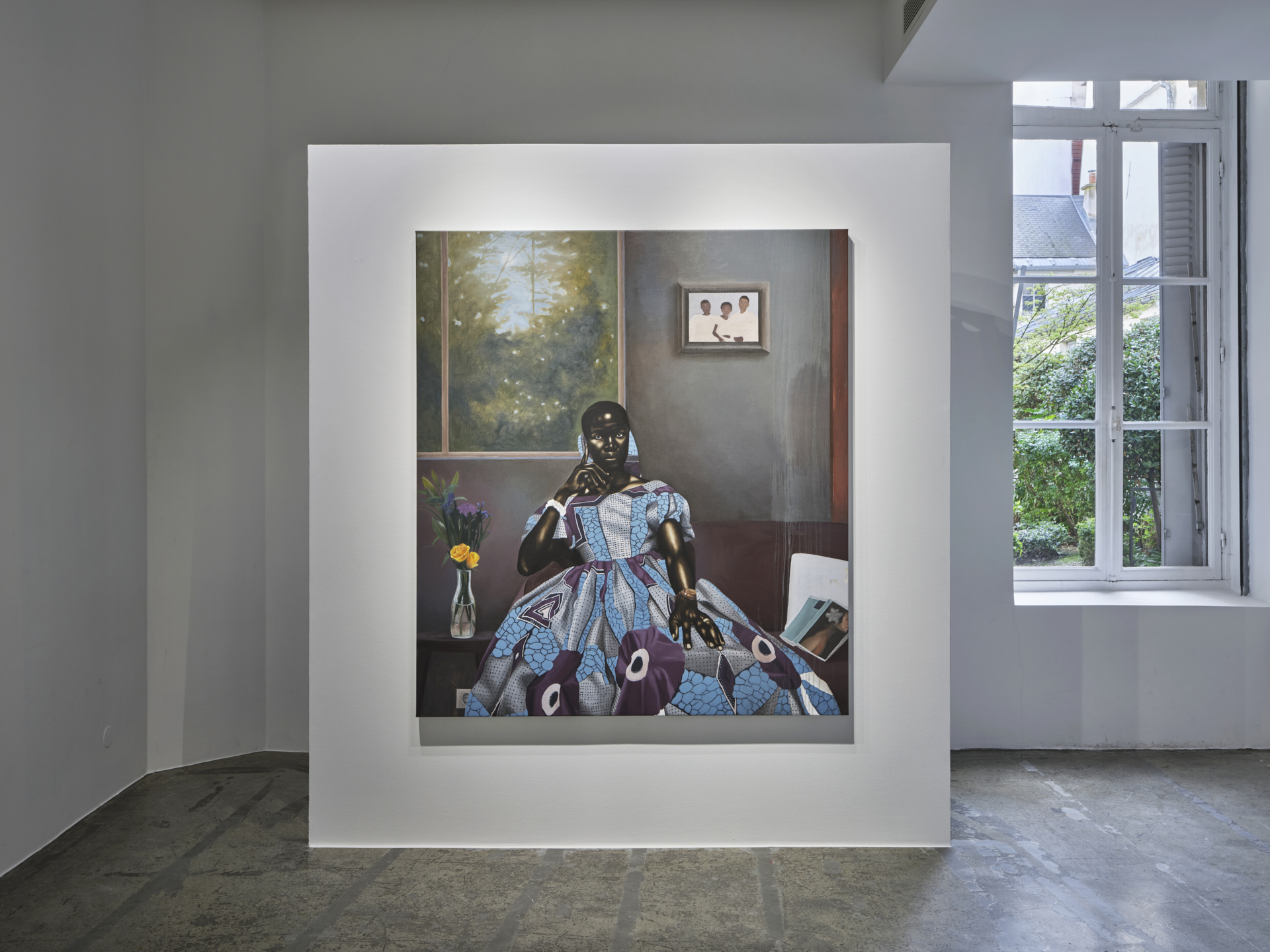
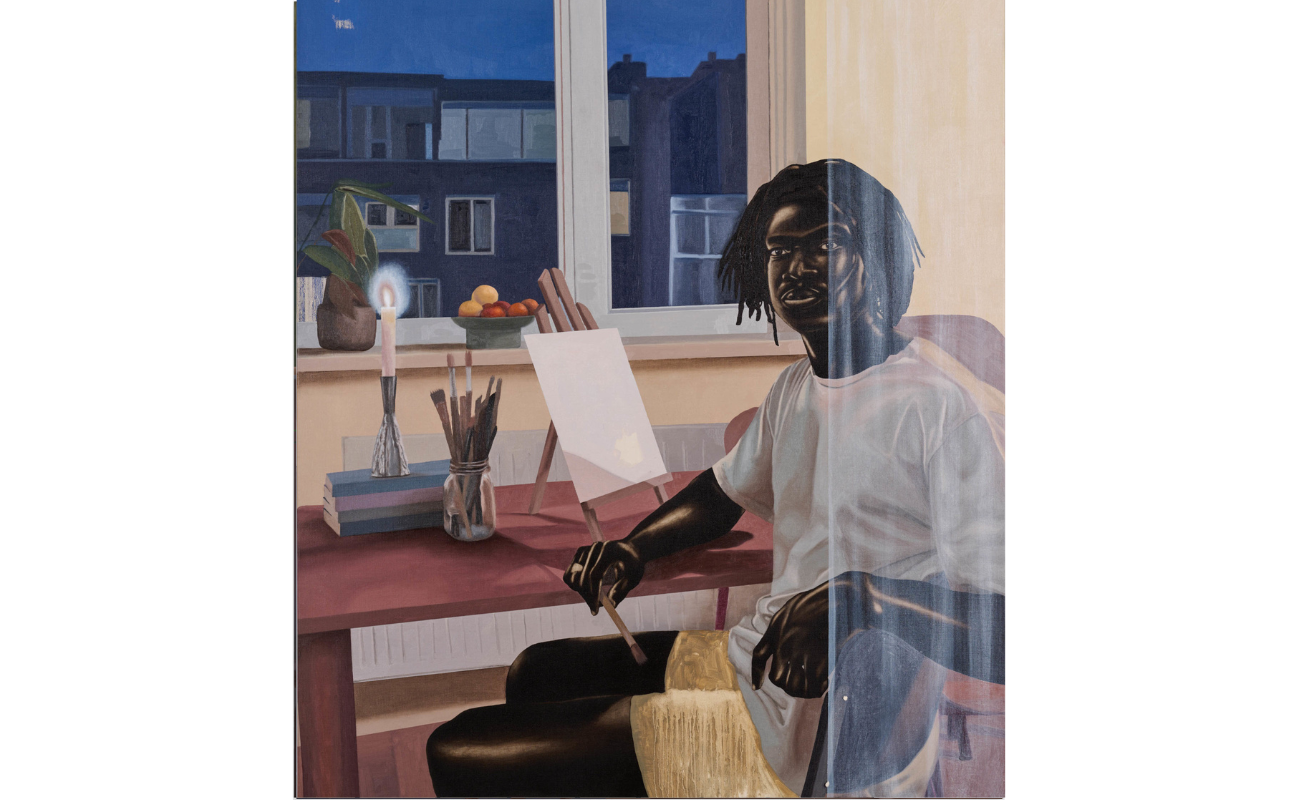
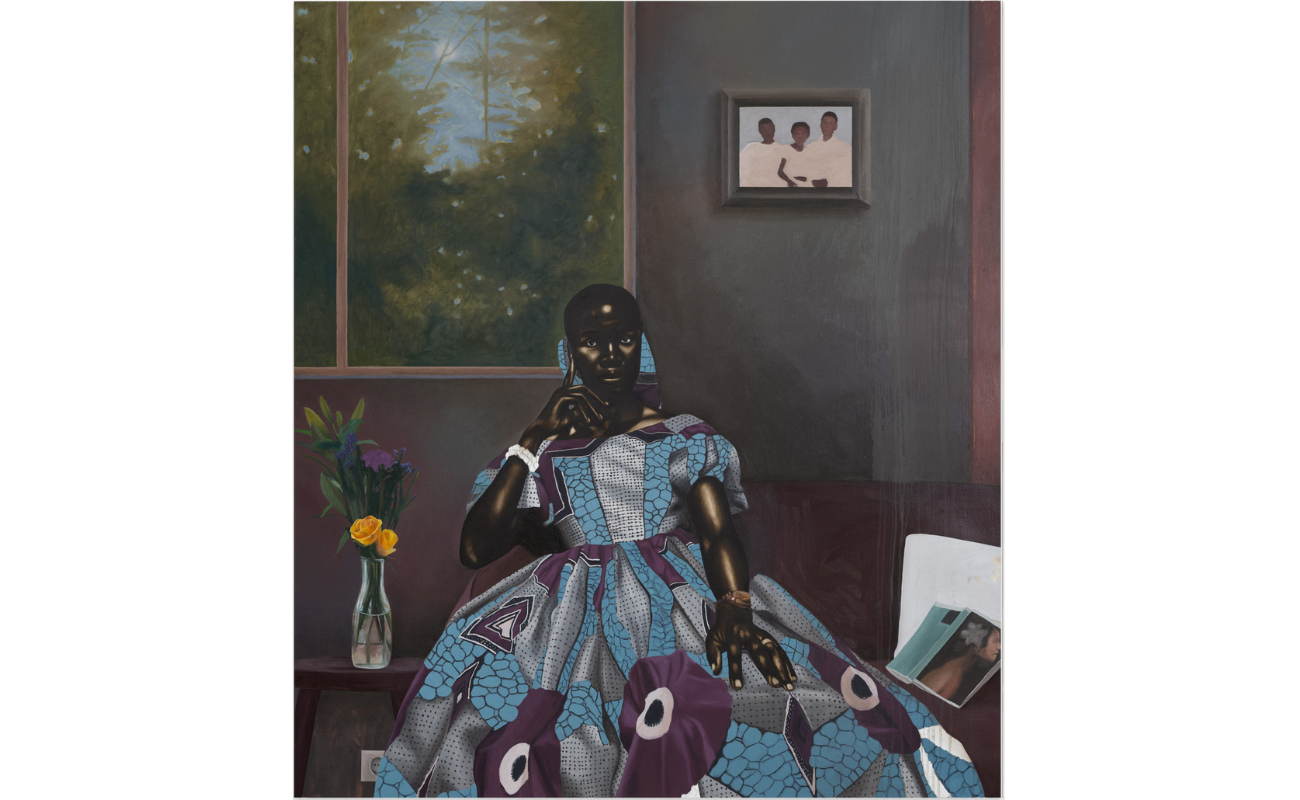
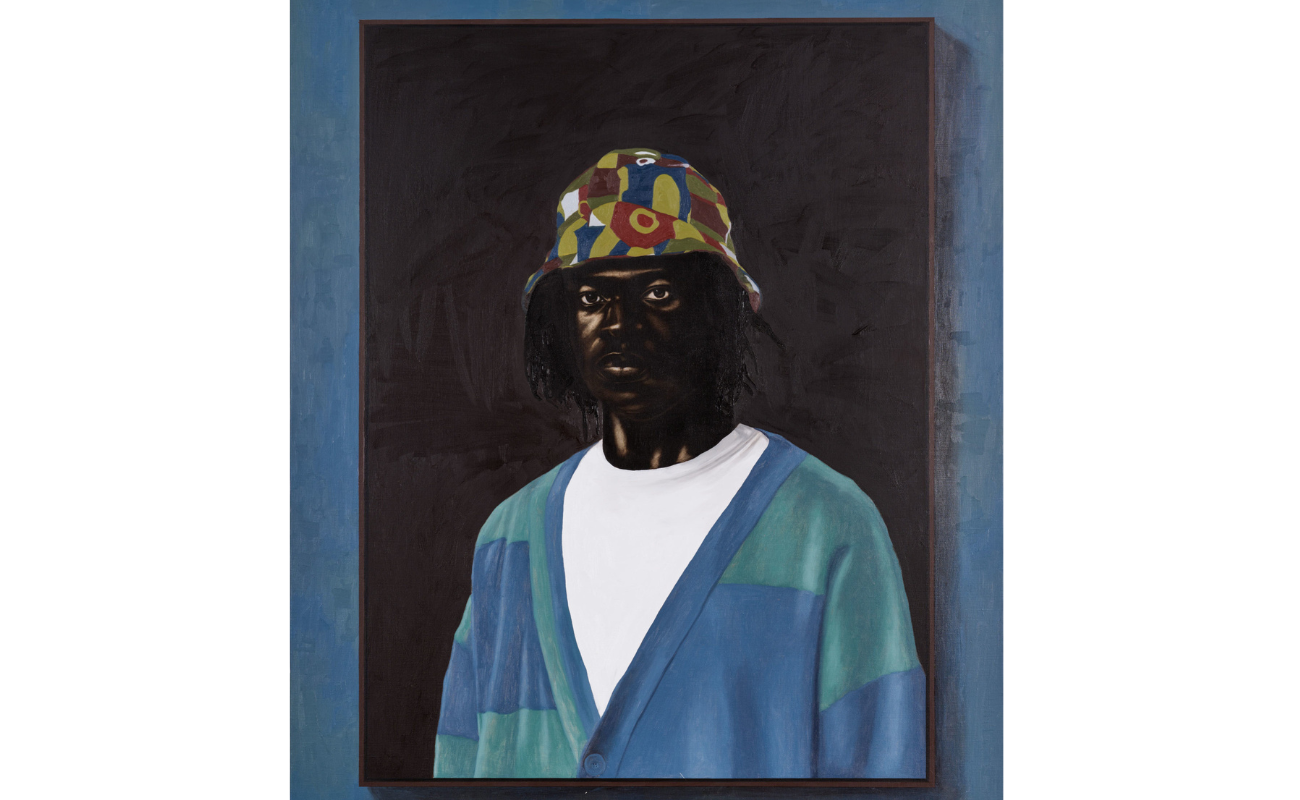
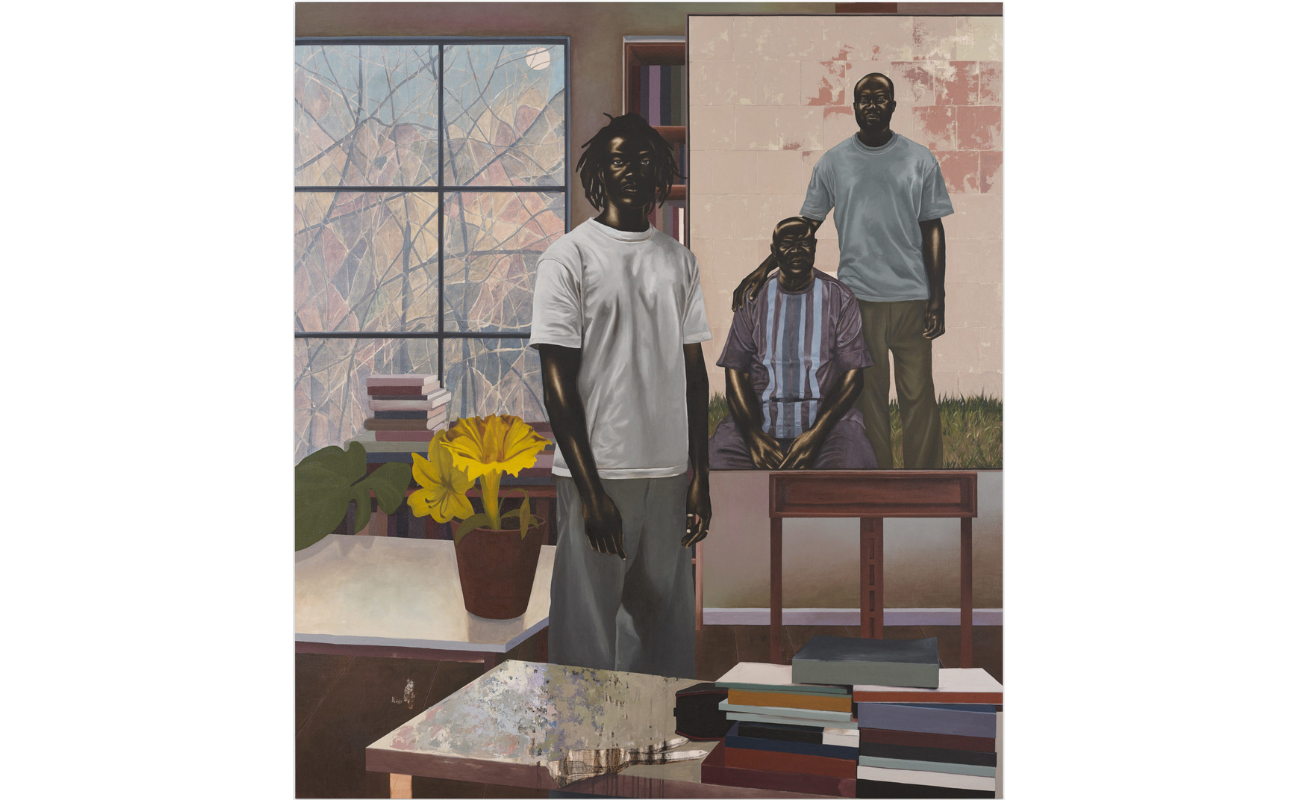
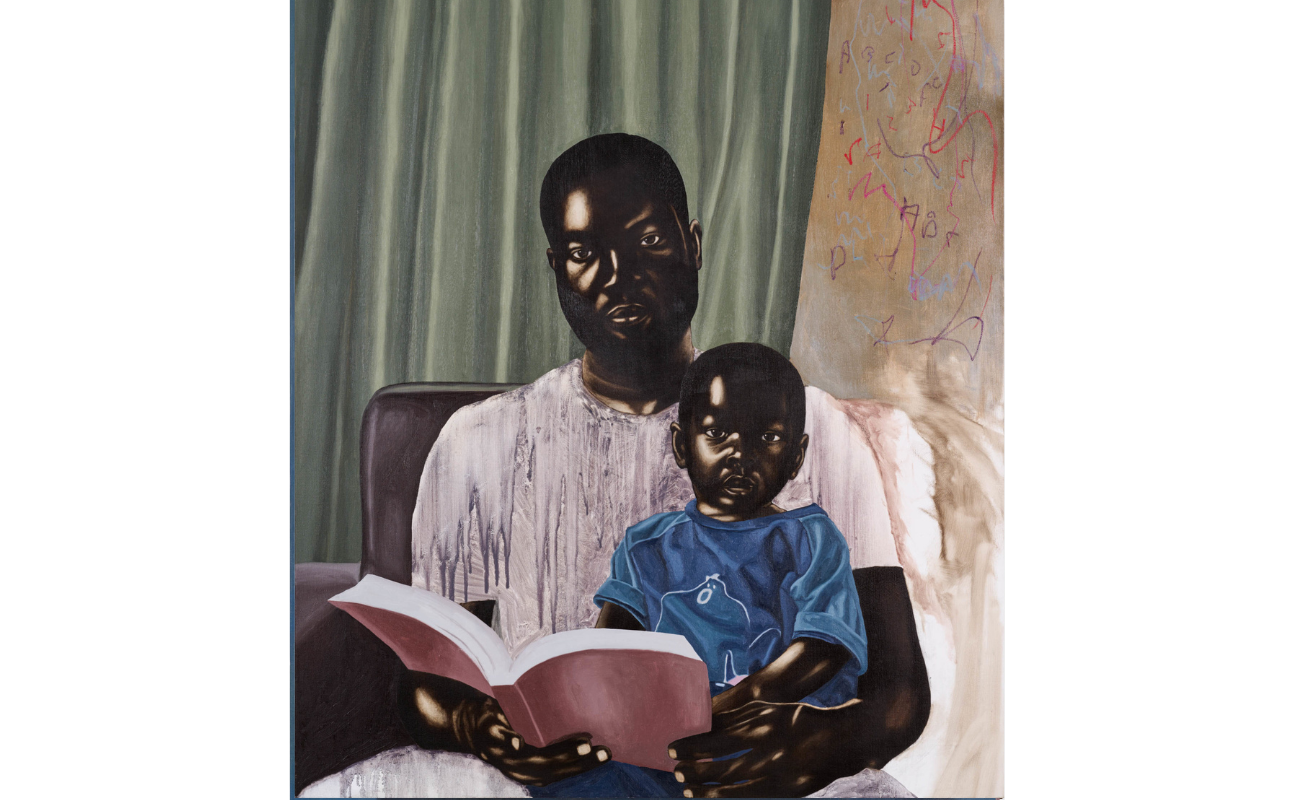
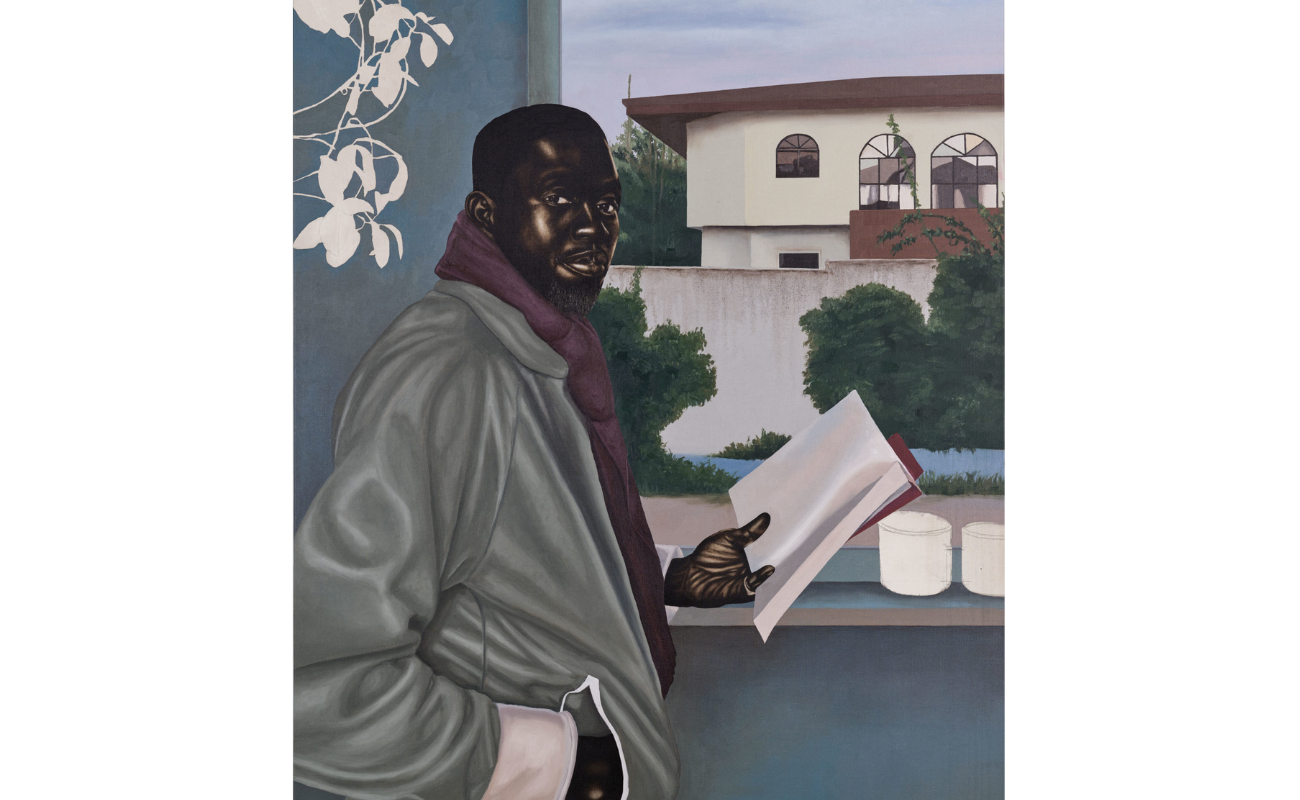
Drawing from his family archives, he brings his loved ones—and himself at different stages of life—onto the canvas: himself in Spare Me a Glance, his mother in Mama Dee, and himself as a child in Do Not Write on Mama’s Wall. He reconstructs a world of inhabited interiors and memory-filtered landscapes. Walls covered with family photographs, half-open windows, domestic objects: all form a visual language where past and present, here and elsewhere, overlap.
The figures, almost always frontal, create a silent face-to-face encounter with the viewer. They seem to ask a deeply personal and universal question: where are your roots? Their stillness opens a space for projection, a meditation on memory as a living inheritance.
Painting Memory: Between Figuration and Symbolism
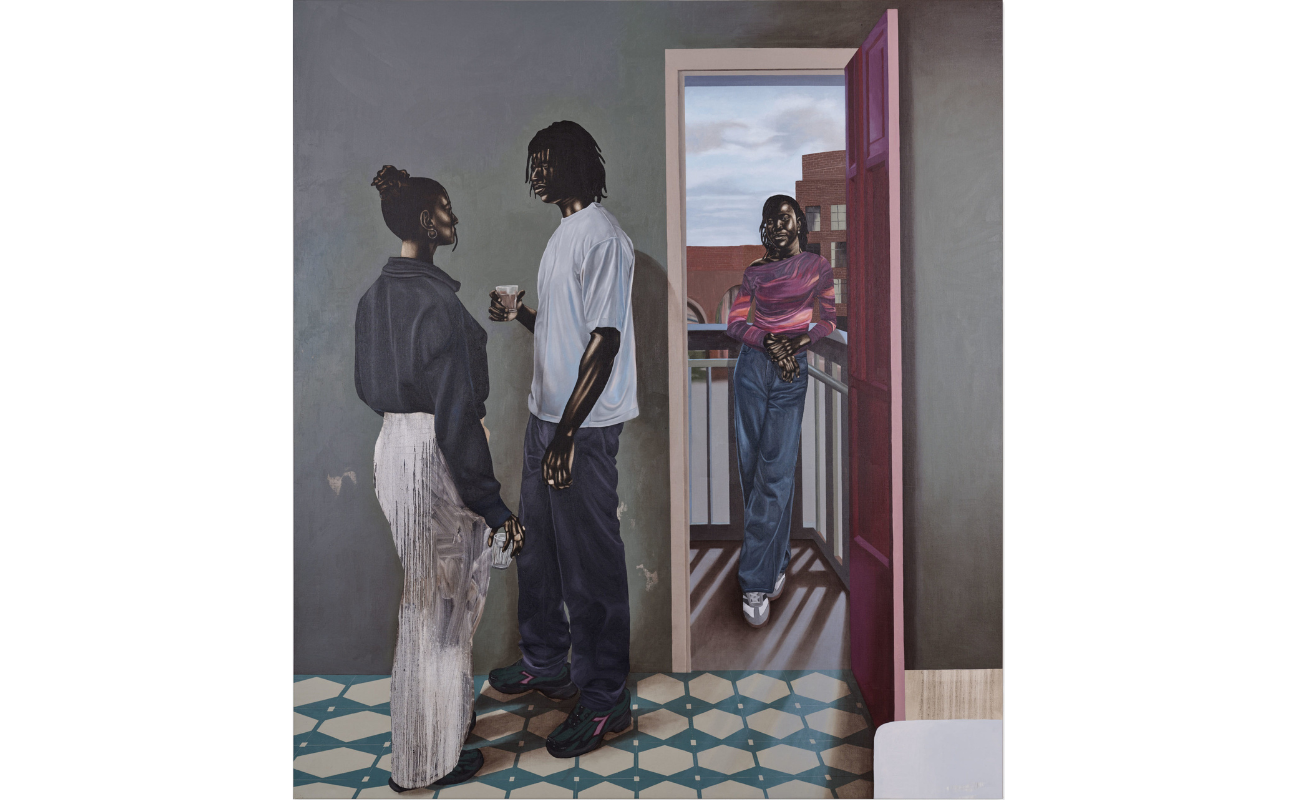
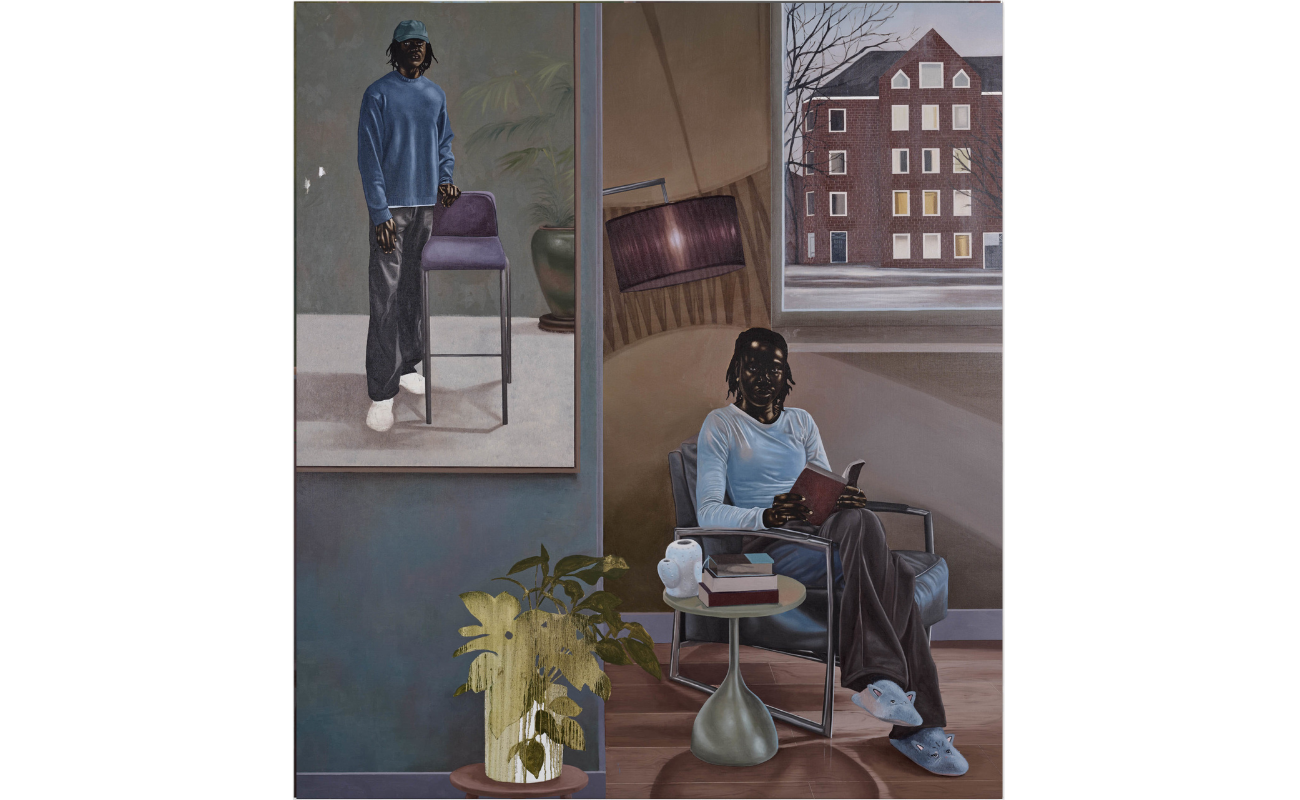
At the heart of Oluwaseyi’s work lies a productive tension: he paints in a figurative mode but thinks symbolically. Faces, bodies and interiors retain a realistic presence; yet his compositions move beyond mere representation. They layer planes, objects and fragments, constructing complex spaces rather than simple scenes.
These seemingly domestic settings become psychological theatres in which every detail carries symbolic weight. Doors, curtains, mirrors, photographs: each element acts as a sign, a passage, a trace of elsewhere. Windows and thresholds evoke transition and introspection, while figures and interiors become emotional territories where past, present, identity and migration intersect.
For Oluwaseyi, memory is a living material, constantly reshaped. Rather than fixing a nostalgic past, he reconstructs and reinterprets it through the very substance of painting.
This tension is reflected in his technique: thick layers, saturated pigments, visible brushstrokes. Reds, ochres and yellows interact with more subdued greys, creating a vibrant emotional field held in delicate balance. His painting seeks less to demonstrate than to evoke, to make the viewer feel.
By combining figuration and symbolism, Oluwaseyi develops a painting of thresholds—between reality and memory—inviting viewers to recognise themselves as they move through their own recollections.
A Journey Between Two Worlds
Born in Ilorin in 1994, in Kwara State, and originally from Kogi, Oluwaseyi did not initially intend to become a painter. Trained in agricultural engineering, he discovered painting through online tutorials before fully committing to it. This self-taught trajectory informs his approach: painting is not an inheritance, but a field of intuitive experimentation.
His early socially engaged works quickly attracted collectors and critics. Yet it was his residency at the Rijksakademie van Beeldende Kunsten in Amsterdam (2023–2025) that marked a decisive turning point. In this demanding environment, he refined his pictorial language, deepened his engagement with materiality, and explored how memory becomes embedded in the canvas. The 2024 and 2025 Open Studios confirmed this evolution, culminating in the Royal Award for Modern Painting, presented in 2025 by King Willem-Alexander of the Netherlands.
Today, between Lagos and Amsterdam, Oluwaseyi continues to develop a distinctive visual language where autobiography and symbolism intertwine with remarkable emotional precision. Buried Roots Up in the Air marks a key milestone in this trajectory, bridging the social engagement of his early work with a more intimate exploration of memory and resilience.