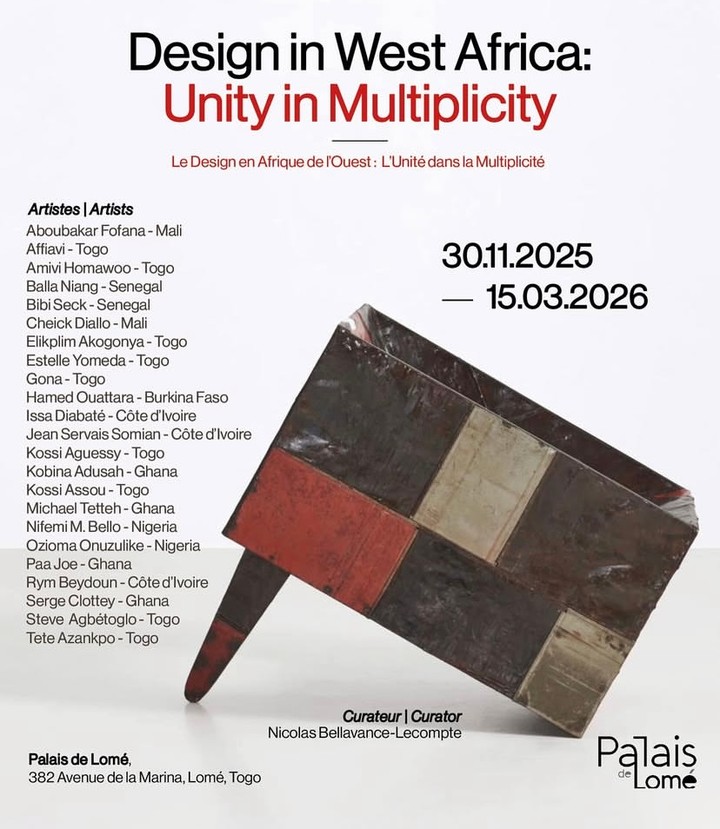
In Lomé, West African Design Finds Its Voice

Over the past fifteen years, contemporary African design has gained increasing visibility. Internationally, fairs and museums have opened their doors more widely to designers from the continent, while across Africa, biennials and exhibitions have multiplied. From within the continent itself, structured and compelling proposals are now emerging—ones capable of contributing to the global design debate while remaining closely connected to the social, economic, and environmental realities of their territories.

In Lomé, Design in West Africa: Unity in Multiplicity captures this momentum through a selection of works—furniture design, sculptural objects, and textiles—created by designers from Benin, Burkina Faso, Côte d’Ivoire, Ghana, Mali, Nigeria, Senegal, and Togo. Rather than offering an exhaustive survey, the exhibition proposes a sensitive and tangible reading of contemporary West African design, attentive to forms, uses, and contexts.

Lomé, a New Palace of Design

An emblematic building in the Togolese capital, the former governors’ residence—abandoned for twenty years before being restored—has been transformed into an international center for art, culture, and history. Since 2019, the Palais de Lomé has established itself as a leading cultural institution in West Africa, with programming that blends exhibitions, performances, conferences, and educational activities.
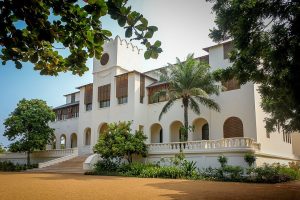
Under the leadership of its director, Sonia Lawson, the institution has given increasing prominence to design, inspired by a conversation with Togolese designer Kossi Aguessy, who lamented not being more widely exhibited in West Africa despite his international recognition. Design in West Africa: Unity in Multiplicity reflects the Palais’ ambition to make Lomé a center for reflection and dissemination of African design.

Rare in its scope, the exhibition gathers nearly twenty West African designers in a journey entirely dedicated to contemporary design from the region. Among them are Nifemi Marcus Bello (Nigeria), Jean Servais Somian (Côte d’Ivoire), Aboubakar Fofana and Cheick Diallo (Mali), Balla Niang (Senegal), Amivi Homawoo (Togo), and Estelle Yomeda (France/Togo). The exhibition’s theme—unity in multiplicity—expresses the ambition to reveal, beyond the diversity of practices and signatures, a shared West African identity rooted in a common attention to gesture, material, and use.
Hybrid Forms ans Sustainable Materials

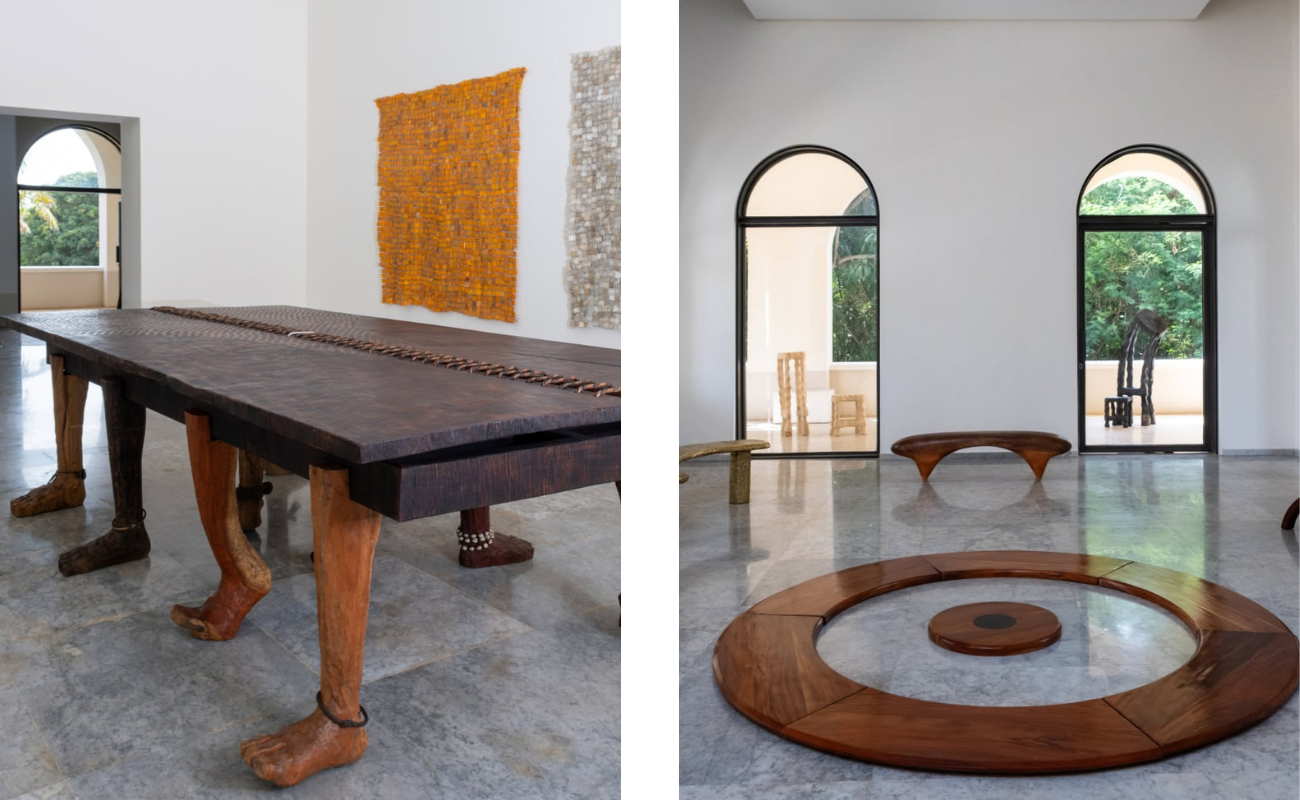
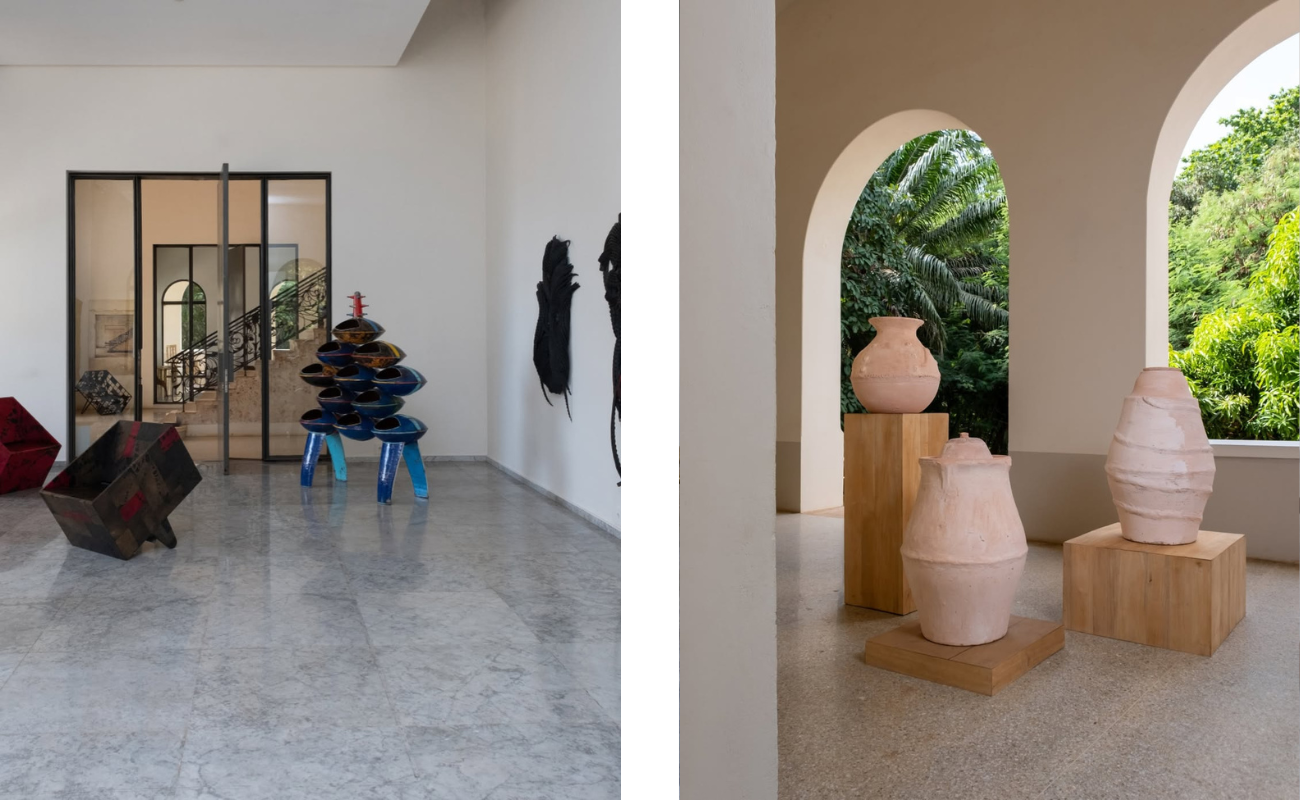
The exhibition unfolds as a free-flowing stroll through the rooms, terraces, and gardens of the Palais, without a prescribed path. Space and natural light enhance the works within a deliberately understated scenography designed to encourage close observation and direct engagement with forms and materials.

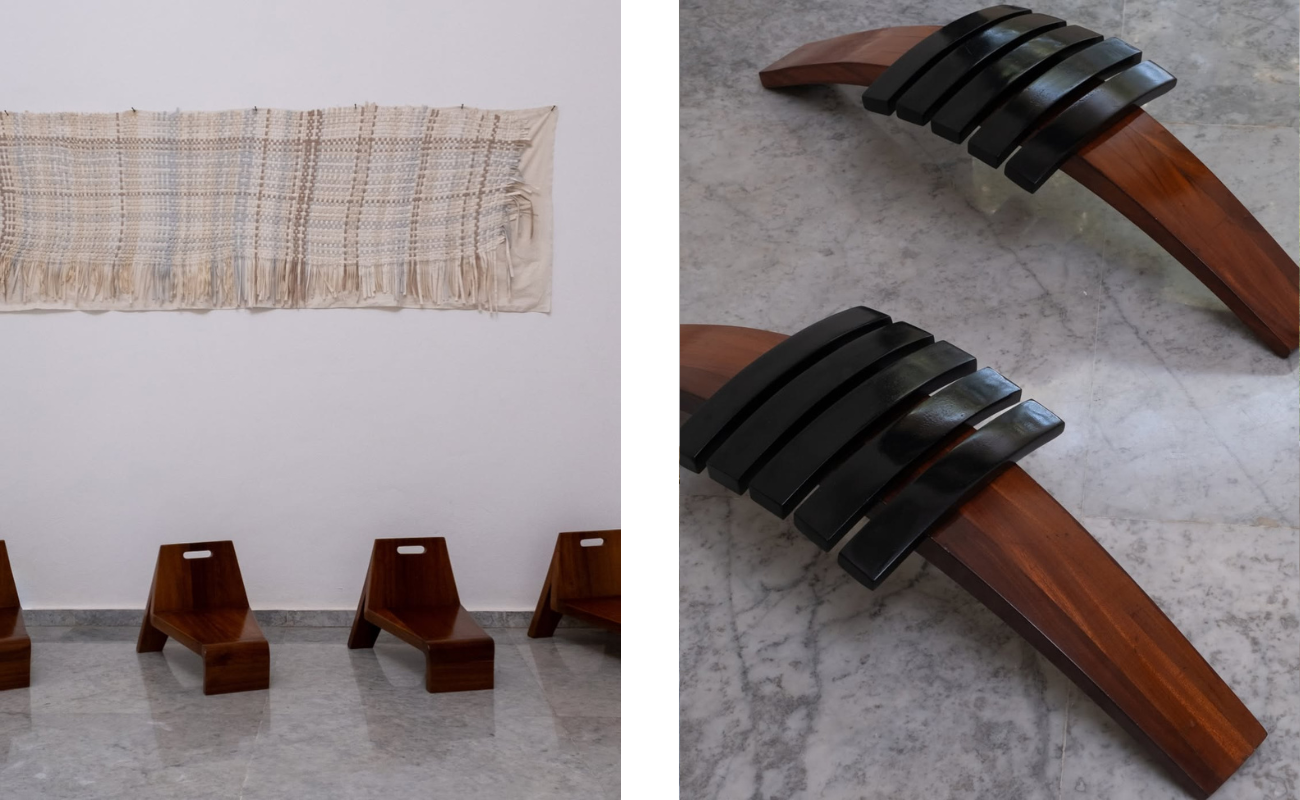
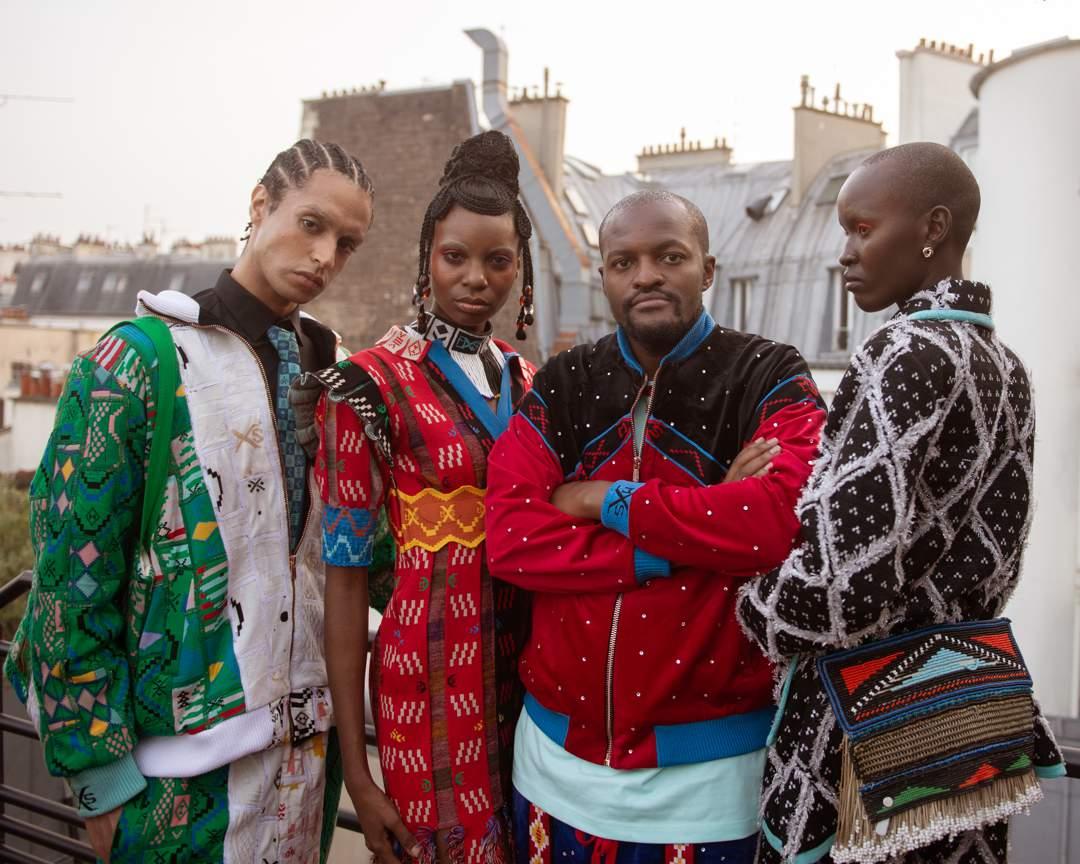
Behind stylistic singularities, affinities quickly emerge—particularly in the choice of materials. Designers combine modernity and tradition by working with local resources through artisanal know-how. Aboubakar Fofana stands out for his indigo-dyed textiles, while Balla Niang combines metal and wood using traditional techniques. Others turn to recycled materials, such as Nifemi Marcus Bello, who creates functional and poetic furniture from reclaimed resources. For Cheick Diallo, recycled fibers become lightweight, durable seating. Amivi Homawoo revisits traditional objects using salvaged materials. These practices demonstrate how local constraints and resources become drivers of creativity while addressing sustainability challenges.

The works are equally striking for their formal hybridity. The creations blur the boundaries between art and design: domestic objects become sculptures, furniture carries cultural symbolism. Cheick Diallo, a major figure in African design, demonstrates how furniture can embody a social vision of design, combining formal inventiveness, technical rigor, and reflection on use. The works of Jean Servais Somian, Amivi Homawoo, and Estelle Yomeda extend this reflection, oscillating between heritage and contemporary expression, functionality and sculptural dimension.

A Global Source of Inspiration

The exhibition comes at a pivotal moment for contemporary African design. In recent years, designers from the continent have gained greater visibility on international stages while simultaneously building local ecosystems through fairs, platforms, residencies, and awards in cities such as Dakar, Lagos, Accra, and Nairobi.

Design in West Africa demonstrates how the West African scene is developing its own visual language without seeking to conform to dominant standards. Issues of sustainability, circularity, and material sobriety—often presented as key concerns of global contemporary design—are addressed here in concrete ways. Working with available resources, transforming, repairing, reinventing: these practices form the foundation of many of the approaches presented.

Rather than proposing universal models, designers create responses adapted to their contexts, climates, and uses. This grounded relationship to reality is the strength of West African design—a design conceived for and with communities.

By giving form to this plurality of voices, the Palais de Lomé asserts its role as a major platform for contemporary African design and firmly places the region on the global design map.

Share the article
also read
  • All Posts
  • Lifestyle
  • Beauté
  • Culture